
A clear guide to how modern attacks work, the defenses that stop them, and the shifts shaping the next decade of digital safety.

Why cybersecurity matters now
Cybersecurity is the practice of protecting devices, networks, and data from unauthorized access and damage. It now touches almost everything we do, from banking and healthcare to the messages we send friends.
The scale of the problem keeps growing. Billions of people carry powerful computers in their pockets, and every connected device widens the surface that attackers can target.
The cost is enormous and still rising. Cybercrime drains trillions from the global economy each year, and no group is too small to be worth an attacker's time.
Attackers usually chase the easiest opportunity rather than the biggest prize. A small business with weak defenses can be a more tempting target than a large one with a strong security team.
For a shared starting point, many teams anchor their work to the NIST Cybersecurity Framework, which treats security as a continuous cycle of identifying, protecting, detecting, responding, and recovering.
Good security is never a single product. It is a mix of habits, tools, and decisions that work together to lower risk.
The three goals behind every defense
Most security work protects three qualities of information, often called the CIA triad. They are confidentiality, integrity, and availability.

Confidentiality keeps data private, so only the right people can read it. Integrity keeps data accurate, so it cannot be changed without permission. Availability keeps systems running, so people can use them when they need to.
A hospital record shows why all three matter together. It must stay private, it must be accurate, and it must be available the very moment a doctor needs it.
Once these three goals are clear, most tools start to make sense. Encryption serves confidentiality, checksums serve integrity, and backups serve availability.
A short history of cyber threats
Cyber threats are not new. The first self-replicating programs appeared decades ago, long before most homes owned a computer.

In the 1980s and 1990s, viruses traveled through floppy disks and young networks, often as pranks rather than serious crimes. As the internet grew, the incentives grew with it, and attacks turned professional.
The 2000s brought fast-spreading worms and the first big wave of financially motivated malware. The 2010s added nation-state operations and the explosion of ransomware that still dominates headlines today.
Today much of the threat is driven by money, and in some cases by governments. Criminal groups now run like businesses, with support desks and rented tools.
Looking back helps explain the present. Each wave of new technology brought fresh conveniences and, close behind, fresh ways to abuse them.
Understanding the threats in detail
Threats come in many forms, but most fall into a handful of recognizable categories. The table below is a quick map, and the sections that follow explain each one in plain terms.
Common threat types at a glance
| Threat | How it works | Common target |
|---|---|---|
| Malware | Malicious software that infects a device to steal, damage, or spy | Personal and work computers |
| Phishing | Fake messages that trick people into sharing credentials | Email and messaging users |
| Ransomware | Software that locks files and demands payment for access | Businesses and hospitals |
| Social engineering | Manipulation that exploits trust rather than code | Employees and help desks |
| Denial of service | A flood of traffic that overwhelms a service until it fails | Websites and online platforms |
| Insider threat | Misuse of legitimate access by someone inside the organization | Company data and systems |
| Zero-day exploit | Abuse of a flaw before a fix exists | Widely used software and devices |
Malware, the umbrella term

Malware is the broad name for any software written to harm, steal, or spy. It is less a single thing and more a family of tools that attackers mix and match.
Viruses attach themselves to files and spread when those files are shared. Worms go further and copy themselves across networks without any help from a user.
Trojans hide inside programs that look useful, then open a back door once installed. Spyware and keyloggers sit quietly and record what you type, while rootkits bury themselves deep in a system to avoid detection.
Many infected machines are then linked into a botnet, a hidden army of devices that attackers can rent out or aim at a target. Good antivirus tools, careful downloads, and prompt updates remove most of this risk.
Phishing and social engineering

Phishing remains one of the most common ways in. Attackers lean on urgency and familiar branding to push people into clicking before they think.
The trick has many shapes. Spear phishing targets one specific person with tailored details, whaling goes after senior executives, smishing arrives by text message, and vishing uses phone calls that sound official.
A costly cousin is business email compromise, where an attacker poses as a boss or a supplier and asks for an urgent payment. These messages often skip malware entirely and simply exploit trust.
These scams are tracked closely by the FBI Internet Crime Complaint Center, which publishes how often they succeed and how much they cost victims each year. You can see its reporting at the IC3 website.
Recognition is the best defense. Slow down, check the real sender address, and confirm any unusual request through a separate channel before you act.
Ransomware
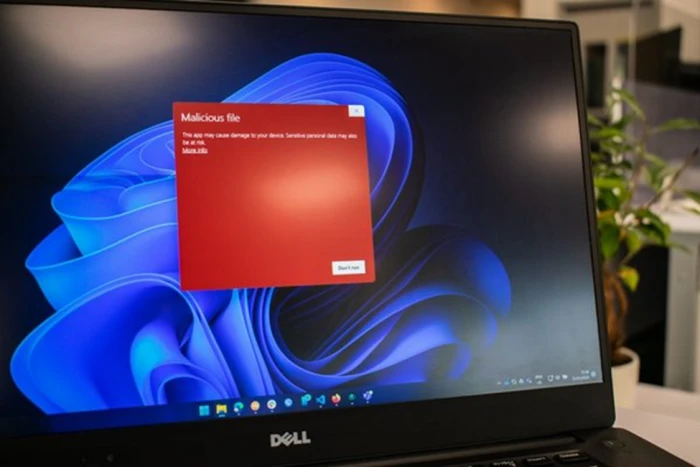
Ransomware has grown into a serious threat to hospitals, schools, and city services. When files are locked, entire operations can grind to a halt within minutes.
Modern ransomware often uses double extortion. Attackers encrypt the files and also steal a copy, then threaten to publish it unless they are paid.
The crime has even been packaged as a service. Skilled groups build the tools and rent them to less technical criminals in exchange for a share of the profits.
Reliable offline backups are the strongest answer, because they let an organization restore its systems without paying. Public guidance on the StopRansomware hub explains how these attacks spread and what to do if you are hit.
Denial-of-service attacks
A denial-of-service attack does not steal data. It tries to knock a service offline by flooding it with far more traffic than it can handle.
When the flood comes from many machines at once, usually a botnet, it is called a distributed denial-of-service, or DDoS. The sheer volume can overwhelm even large websites.
For an online business, downtime means lost sales and frustrated customers. Specialized providers now filter this junk traffic before it ever reaches the target.
Insider threats

Not every threat comes from outside. Sometimes the risk sits inside the building, with someone who already has access.
Insider threats come in two flavors. A malicious insider abuses their access on purpose, while a careless one causes harm by mistake, perhaps by mishandling data or falling for a scam.
These cases are hard to catch, because the activity can look like normal work. Limiting each person to only the access they truly need, an idea called least privilege, keeps the damage small when something goes wrong.
Web application attacks

Websites and apps face their own set of weaknesses, from injection flaws to broken access controls. Attackers probe these gaps automatically, day and night.
Injection attacks trick an application into running commands it should not, which can expose an entire database. Cross-site scripting slips malicious code into a page so that it runs inside another visitor's browser.
Broken access control is simpler and just as dangerous. It lets a user reach data or actions that should be off limits to them.
The OWASP Top Ten is a widely used list that ranks the most critical of these risks for developers and testers.
Zero-day exploits and supply chain attacks

A zero-day is a flaw that defenders do not yet know about, which means no patch is available. Attackers who find one first hold a powerful and short-lived advantage.
Supply chain attacks take a different angle. Instead of breaking into a target directly, an attacker hides malicious code inside trusted software that the target already installs.
Both are hard to stop with any single tool. Layered defenses, quick patching once a fix appears, and careful vetting of software all reduce the exposure.
It helps to know how real breaches actually happen. The annual Data Breach Investigations Report, published as the Verizon DBIR, studies thousands of incidents and finds that human error and stolen credentials play a role far more often than dramatic hacks.
How an attack unfolds
Most attacks follow a rough pattern that security teams call the kill chain. An attacker studies a target, finds a way in, gains a foothold, moves deeper, and finally acts on a goal.

Reconnaissance comes first, as the attacker gathers names, email addresses, and technical details. Next comes the initial break-in, often through a stolen password or a booby-trapped file.
Once inside, an attacker tries to move quietly from one system to the next. The longer they stay hidden, the more damage they can do.
Skilled attackers often blend in by using the system's own built-in tools, a tactic called living off the land. It leaves fewer traces and makes their activity harder to separate from normal work.
Security teams map these steps against public knowledge bases so they can plan a defense for each stage. One widely used reference is the MITRE ATT&CK knowledge base, which catalogs the real techniques that attackers use.
This flow is useful because defenders can break the chain at any link. Catching an intruder early, before they reach valuable data, can turn a disaster into a minor event.
The real-world impact of breaches
A breach is rarely just a technical problem. It affects real people, real money, and hard-won trust.

For a business, the costs pile up quickly. There are fines, legal fees, recovery work, and lost customers who no longer feel safe.
For individuals, a breach can mean stolen identity, drained accounts, and months of cleanup. That stress is easy to overlook in the headlines.
Reputation is often the slowest thing to recover. Customers may forgive a single mistake, but repeated failures can push them toward competitors for good.
Hospitals and public services carry an added risk, because downtime can delay care and disrupt daily life. This is why many governments now treat cybersecurity as a matter of public safety.
Building strong protection
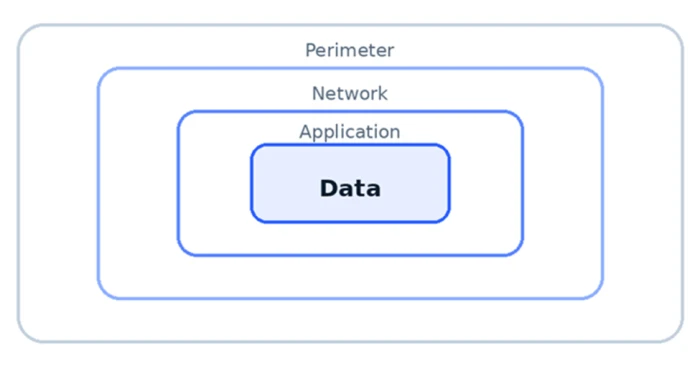
Strong security relies on layers, an idea known as defense in depth. If one layer fails, another still stands behind it.
Habits that stop most everyday attacks
A short set of habits protects against the large majority of common threats. None of them require deep technical skill.
● Turn on multi-factor authentication wherever it is offered.
● Keep software and devices updated so known holes get patched quickly.
● Use a password manager and a unique password for every account.
● Back up important files, and keep at least one copy offline.
● Stay cautious with unexpected links and attachments.
Encryption, the quiet workhorse

Encryption deserves special mention. It scrambles data so that even if attackers steal it, the contents stay unreadable without the key.
You already rely on it more than you might notice. The padlock in your browser and the privacy of your messaging apps both lean on strong encryption.
Patching, segmentation, and a plan
Many breaches exploit flaws that already had a fix available. Keeping systems patched closes those doors before attackers can walk through them.
Dividing a network into smaller zones, called segmentation, keeps a single break-in from spreading everywhere. If one zone falls, the others stay protected.
Every organization also needs an incident response plan. Knowing in advance who to call and what to do turns a chaotic emergency into a practiced routine.
People are a layer too

Staff become the strongest layer when they are trained well. Education from groups such as the SANS Institute helps employees recognize and report attacks before they spread.
Individuals have solid resources too. The National Cybersecurity Alliance shares plain, friendly guidance for families and small businesses through StaySafeOnline.
Moving toward zero trust
Many organizations are shifting to a model called zero trust. Rather than assuming that anyone inside the network is safe, it verifies every request, every time.
National agencies publish free help for teams adopting stronger models, including the practical advice offered by the UK National Cyber Security Centre.
Cybersecurity at home and at work
Good security looks a little different at home than it does at work, though the core ideas overlap.
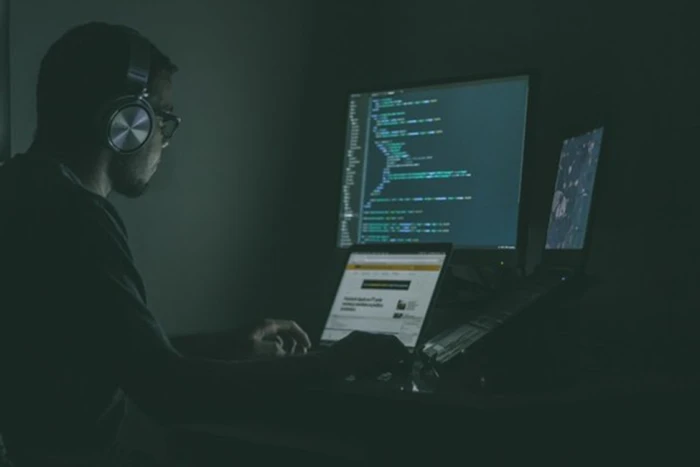
At home, the goal is to protect your accounts, your devices, and your family. Strong passwords, timely updates, and a healthy dose of caution go a long way.
At work, the stakes and the scale are larger. Companies must protect many users, sensitive records, and systems that customers depend on.
Small businesses sit in a tricky middle ground. They hold valuable data yet often lack a dedicated security team, which makes simple, consistent habits especially important.
The habits carry in both directions. People who practice good security at home tend to bring those instincts to work, and the reverse holds as well.
Careers in cybersecurity
Demand for security talent has grown faster than the supply, which makes this a promising field to enter.
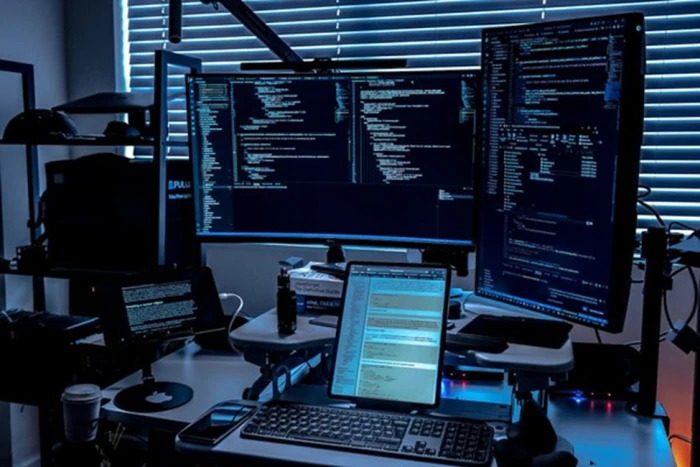
Roles range widely. Analysts watch for threats, engineers build defenses, testers probe for weaknesses, and leaders shape strategy and policy.
The work splits into broad camps. Defensive blue teams protect systems, offensive red teams attack them on purpose to find gaps, and governance roles keep the whole effort aligned with rules and risk.
You do not need to start as an expert. Many people move into security from help desk work, software development, or fields well outside of technology.
Curiosity matters more than any single certificate. The best practitioners keep learning, because the tools and the threats never stop changing.
The future of cybersecurity
The field is changing quickly, pushed forward by new technology on both sides of the fight.
Artificial intelligence

Artificial intelligence now helps defenders spot unusual behavior across huge volumes of data. The same tools can help attackers write more convincing scams, so the race carries on in both directions.
Security in the cloud
More data and services now live in the cloud rather than on local machines. That shift brings strong built-in protections, along with new responsibilities to configure them correctly.
Misconfigured cloud storage has caused many large leaks. The tools are powerful, but they still depend on people setting them up with care.
Quantum computing
Quantum computers could one day break some of the encryption we rely on today. Researchers are preparing early, and standards bodies have begun releasing post-quantum cryptography built to resist these future machines.
A world of connected devices

The number of connected devices keeps climbing, from doorbells to factory sensors. Each one adds convenience, and each one is another door that has to be secured.
Stronger rules and cooperation
Governments are stepping in with firmer rules on data protection and breach reporting. In Europe, the EU Agency for Cybersecurity works to raise standards across member states.
Key takeaways
1. Cybersecurity protects three things: confidentiality, integrity, and availability.
2. Most attacks are ordinary, and simple habits stop the majority of them.
3. Layered defense means no single failure exposes everything at once.
4. People are part of the defense, at home and at work alike.
5. Prepare for the day something slips through, because a calm response limits the harm.
6. The future belongs to teams that keep learning as the tools evolve.
The bottom line
Cybersecurity can feel overwhelming, but its core is surprisingly stable. Threats change their costume every few years, yet the fundamentals that stop them have held for a long time.
Protect the three goals of confidentiality, integrity, and availability. Build defenses in layers so that no single failure is fatal. Train the people around you, because they are both the most common target and the strongest safeguard. And prepare for the day something slips through, since a calm, rehearsed response is what limits the harm.
The tools will keep evolving. Artificial intelligence, quantum computing, cloud platforms, and a flood of connected devices will all reshape the field in the years ahead. The people and organizations who stay safe will be the ones who keep learning and keep adjusting, treating security as a habit rather than a one-time fix.
In the end, cybersecurity is less about fear and more about respect. Respect for the value of your data, for the trust others place in you, and for the small, steady choices that keep all of it safe.
Comments
Join the discussion and share your perspective.