
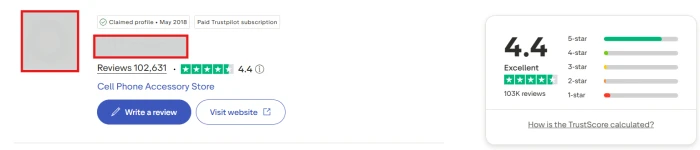
I bought a phone case last year that had a 4.4-star rating and over 100,000 reviews. It cracked in nine days. When I went back to read the reviews again, slower this time, I noticed something I had missed: dozens of them were posted within the same week, said almost the same thing, and praised features the product didn't even have.
That moment is why I wrote this. Not to give you a list of warning signs you'll forget by tomorrow, but to hand you the exact way I now read reviews before I spend a single dollar. By the end of this, you'll be able to scan a product page and tell, in about a minute, whether the reviews are doing their job or quietly lying to you.
Learning how to spot a fake review changed how I shop online. I stopped trusting star counts and started reading patterns. Here's everything I look for, in the order I look for it.
Why Spotting Fake Reviews Actually Matters in Real Life
Before I show you the method, I want you to feel why this is worth your minute. Detection only sticks when you understand what it protects you from.
Fake reviews drain your money directly
The "4.8 stars, 10,000 reviews" badge is designed to short-circuit your doubt. You see the number, you assume the crowd has already done the vetting, and you buy. Then the product shows up cheap, flimsy, nothing like the photos. A fake review lies on behalf of the product so the product never has to earn your trust. That gap between the rating and reality is paid for out of your pocket.
They hijack the part of your brain that trusts a crowd
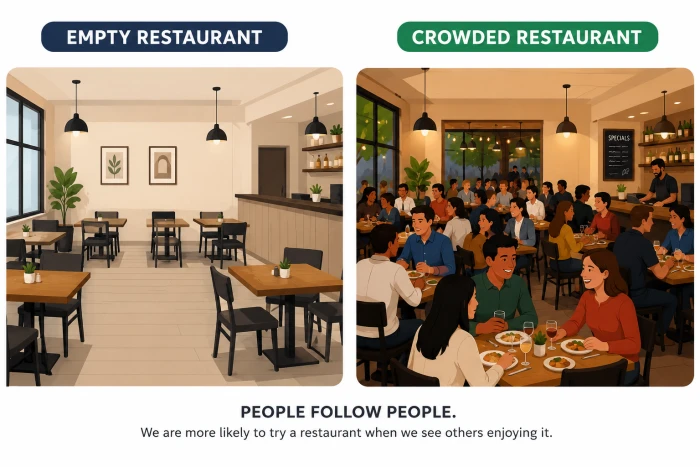
You've walked past an empty restaurant and a packed one and assumed the packed one was better. That instinct is usually right in real life because filling a room takes effort. Online, it takes a budget. Sellers can manufacture the look of a crowd, and your brain still reads it as proof. The instinct is sound. The signal is faked.
You stop living in the loop of regret
There's a cycle most online shoppers know well. You research for an hour, you buy based on glowing reviews, the product disappoints, and the next time you shop you trust nothing and freeze. Reading reviews properly breaks that loop because your decisions start matching your outcomes. You buy, it's roughly what you expected, and your confidence rebuilds.
You start trusting your own read instead of the marketing
Once you can see the seams in a fake review, the hype loses its grip. You stop reacting to the loudest five-star shout and start noticing the quiet, specific three-star review that tells you exactly what you're getting. Your judgment becomes the filter, not the seller's marketing.
It guards you from both directions
Fake reviews aren't only inflated praise. Competitors plant fake one-star reviews to bury a genuinely good product, and rival sellers do this to each other constantly. The same skill that helps you ignore fake praise also helps you ignore a fake pile-on, so you don't walk away from something good because someone paid to make it look bad.
The simple truth underneath all of it
Think of reviews as signboards in an unfamiliar city. Most point you somewhere useful. A few were planted by people who profit when you take the wrong turn. You don't need to distrust every sign. You need to know which ones were put there to mislead you, and that's a skill, not a feeling.
Why Fake Reviews Exist in the First Place
Knowing the motive makes the patterns obvious, because every fake review is solving a problem for someone who isn't you.
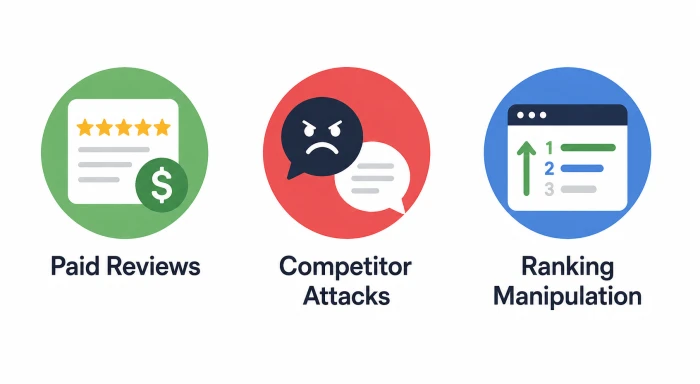
Paid reviews. Sellers hire people, run incentive programs, or quietly refund buyers in exchange for five stars. The reviewer never cared about the product. They cared about the payout.
Competitor sabotage. A rival floods a listing with fake negative reviews to drag the rating down and push their own product up the page. Your loss of trust is their gain in ranking.
Gaming the ranking system. Platforms push products with high ratings and lots of reviews to the top of search. That single rule creates a whole economy of fake reviews, because volume and stars literally buy visibility.
The 5-Step Fake Review Detection System
This is the core of everything. I run these five checks in order, and I rarely need all five before a fake gives itself away. Each step looks at a different thing a faker can't easily get right.
Step 1: The language check
Real people write the way they talk. They ramble, they misspell things, they mention the weird detail that annoyed them. Fake reviews lean on marketing language because they're often written by someone who never used the product. Watch for the full product name repeated like an ad ("This Premium Wireless Bluetooth Earbud Pro X delivers crystal-clear sound"), generic praise that fits any product, and a tone that sounds like the back of the box. A genuine review sounds like a person. A fake one sounds like a brochure.
Step 2: The detail check
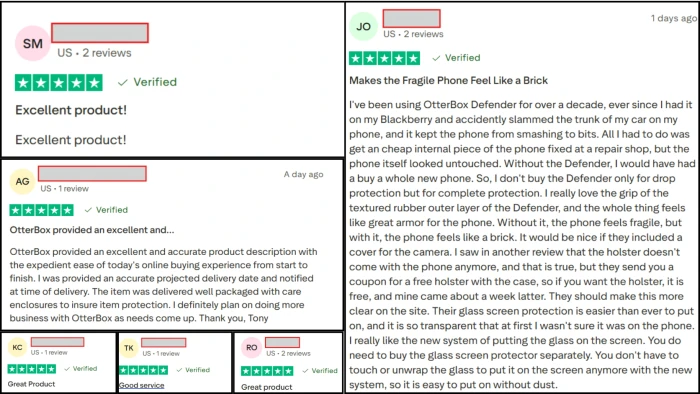
This is my single most reliable test. Ask one question: could the writer have written this review without owning the product? "Great product, highly recommended, works perfectly" passes for any item on earth, which means it tells you nothing. "The charging port is slightly recessed so my thick cable doesn't click in all the way" can only come from someone who held the thing. Specifics are hard to fake. Reward them.
Step 3: The emotion check
Fake reviews tend to live at the extremes. They're either flooded with excitement ("BEST PURCHASE OF MY LIFE!!!") or weirdly venomous with no concrete complaint behind the anger. Real reviews usually carry mixed feelings, because real products have trade-offs. When someone loves a product but mentions the one thing they'd change, that friction is a sign of honesty. Pure, uncomplicated emotion in either direction is worth a second look.
Step 4: The profile check
Click the reviewer's name. A profile that posted forty five-star reviews in two days, all for unrelated products, is a paid account. A profile with one single review, posted the day the product launched, is suspicious. A real reviewer has a scattered, human history: a phone case here, a kitchen gadget there, a mix of ratings over months. The account tells you almost as much as the review.
Step 5: The pattern check
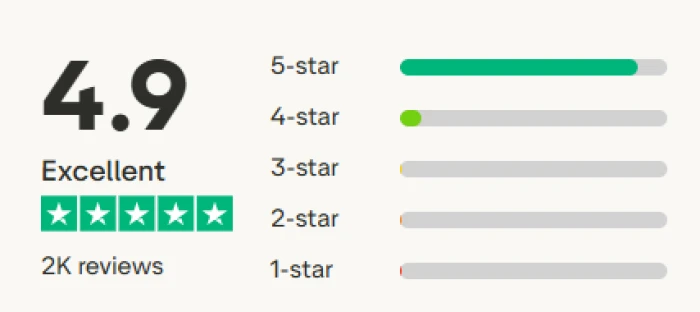
Now zoom out from the single review to the whole page. Sort by most recent and look at timing. A wave of glowing reviews all posted in the same three-day window points to a coordinated push. Repeated phrasing across different "reviewers" points to a script. A rating that's almost all five stars and one star, with very little in the middle, is the shape of manipulation. Honest products produce a messy, gradual spread of ratings over time. Fakes produce spikes and clusters.
Real vs Fake Reviews: A Side-by-Side Look
Putting the two next to each other makes the difference click faster than any rule. Here are two reviews for the same imaginary pair of headphones.
| Likely Fake | Likely Real |
|---|---|
| "Amazing headphones! Best sound quality ever. This Premium Noise Cancelling Headphone is a must-buy. I highly recommend it to everyone. 5 stars!" | "Sound is great for the price, but the noise cancelling is weaker than I hoped on a noisy bus. The left earcup pinches a little after two hours. Still keeping them." |
| Repeat the full product name like an ad. Generic praise that fits any headphones. Pure five-star excitement, zero specifics, no downside. | Names a real trade-off. Mentions a specific scenario and a physical detail. Mixed feelings, which is how real ownership feels. |
The fake one could have been written by someone who never opened the box. The real one could only have been written by someone who wore them on a bus for two hours. That's the whole test in one comparison.
Where Fake Reviews Show Up Most
The five-step method works everywhere, but each platform has its own flavor of fakery worth knowing before you read.
Amazon. The biggest hunting ground, especially for cheap third-party gadgets. Watch for products that suddenly gained thousands of reviews and for "Verified Purchase" being absent on a suspicious cluster. A common trick is hijacking the reviews of an old, unrelated product so a new listing inherits a five-star history it never earned.
Google reviews. Local businesses get hit from both sides. A new restaurant with fifty perfect reviews in its first week, or an established one suddenly buried under one-star reviews from accounts with no other activity, both signal interference.
Yelp. Yelp filters aggressively, so the reviews it hides are often as telling as the ones it shows. Scroll to the "not currently recommended" section to see what got flagged.
Trustpilot. Companies can invite reviews, which skews the average upward. Filter to organic, uninvited reviews to see what customers said without a nudge.
The 1-Minute Scan: Your Quick Checklist
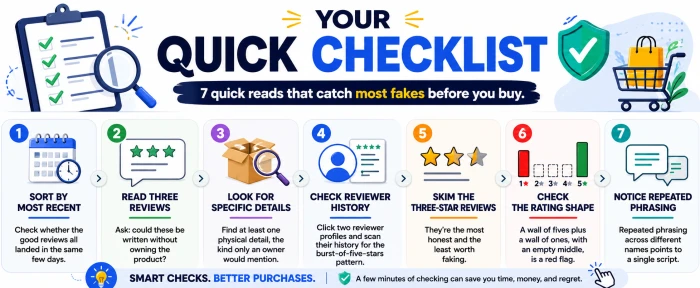
When I'm short on time, I don't run the full system. I run this. Seven quick reads that catch most fakes before I buy.
- Sort by most recent and check whether the good reviews all landed in the same few days.
- Read three reviews and ask: could these be written without owning the product?
- Look for at least one specific physical detail, the kind only an owner would mention.
- Click two reviewer profiles and scan their history for the burst-of-five-stars pattern.
- Skim the three-star reviews. They're the most honest and the least worth faking.
- Check the rating shape. A wall of fives plus a wall of ones, with an empty middle, is a red flag.
- Notice repeated phrasing across different names, which points to a single script.
The One Habit That Replaces All the Rules
If you forget every step above, keep this. Don't trust the rating. Trust the patterns underneath it. A 4.8 average tells you what a number wants you to believe. The spread of the ratings, the specificity of the words, and the history of the people writing them tell you what's actually true.
The next time a product page tries to win you over with a big star and a bigger number, slow down for sixty seconds and read the way the people behind the reviews actually wrote. That single pause has saved me more money than any coupon ever has.
Comments
Join the discussion and share your perspective.