
I opened two tabs on a Tuesday night. One was Talkie, an app my cousin had been quietly obsessed with since March. The other was Nectar, which kept appearing in my feed with claims I assumed were marketing noise.
Fourteen days later I had an answer, though not the one I expected walking in. These two apps get sold as competitors. They are closer to opposites, and the thing that separates them is buried in a single checkbox on one of the pricing pages. I will get there.
First, which Talkie are we talking about?
Search that name and you land on three unrelated companies. This comparison covers Talkie: Soulful AI, the character chat app from Moqi Inc. that ranks in the top ten for AI entertainment across more than a hundred country app stores.
It is not Talkie.ai, the Delaware healthcare company whose voicebots handle clinic appointment calls. It is not Talkio.ai, a language practice tool. Same phonetics, nothing else in common.
The short answer, before the long one
• Choose Talkie if you want voice conversations and a library of millions of characters other people built, on your phone, starting at $4.17 a month.
• Choose Nectar if you want to build the character yourself and hold a conversation that remembers what you said 200 messages ago.
• Check which plan includes memory before you pay. On one of these platforms, the cheap tier does not have it.
• Test both free tiers first. They fall apart in opposite directions, which the sign-up section covers.
How I tested
One script, both platforms, fourteen days.
I built the same character on each, opened with an identical scenario, then ran a fixed 30-message conversation on day one with five specific details planted inside it. Her sister’s name, a city, a stated dislike, a running joke, a date. I came back on day four and again on day fourteen to ask about all five.
The first three days ran on free accounts before I subscribed to anything, so the paywall experience is part of the verdict rather than something I skipped past.
Pricing figures came from the official upgrade pages captured the same afternoon, not from comparison sites, which in this category go stale within a quarter.
Same category, opposite instincts
Both apps sell the identical headline: an AI character that talks back like a person. An hour inside each and the resemblance stops.
Talkie is built like a social network. There is a feed. There are characters made by other users sorted by popularity, a card collection system, daily rewards for showing up. You tap a face and start talking within about nine seconds of opening the app. The design instincts came from short-video apps, not from chatbots.
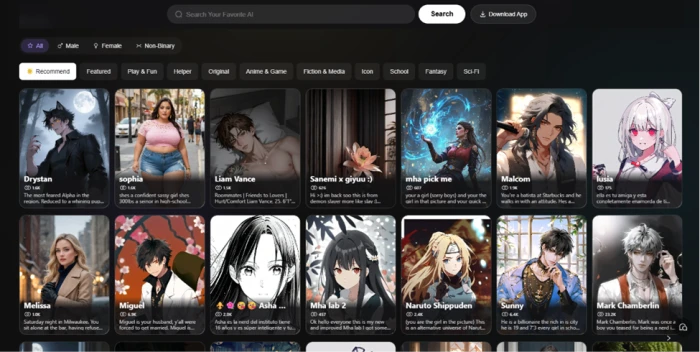
Nectar is built like a workshop. You land on a creation screen before you land on a conversation. Body type, personality traits, backstory, speaking style, all of it configured by you. The character you finish with did not exist before you made it.
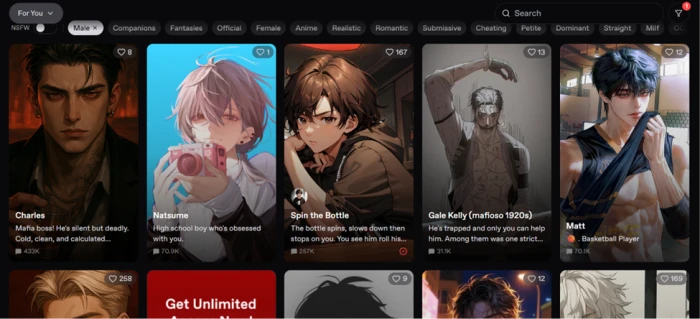
That one difference drives every other difference in this article, including the two things people actually argue about online: what the apps allow you to say, and which subscription tier carries memory.
What Talkie AI actually is
Talkie has crossed ten million users worldwide. Its Google Play listing carries over 730,000 reviews at a 4.5 average, which for a category this young is an unusually large sample.
The product rests on four pillars:
• A character library in the millions, almost all of it community-made and searchable by tag.
• Voice synthesis across a language range far past what competitors attempt, including real-time voice calls with characters.
• Mini-Theater, a scenario system where you and the character act out a scripted setting instead of chatting in a blank window.
• The Advanced Creation Guide, which lets you define how a character reacts in specific situations rather than only what they are like in general.
Talkie is a phone app first. Everything about the interface assumes a thumb.
What Nectar AI actually is
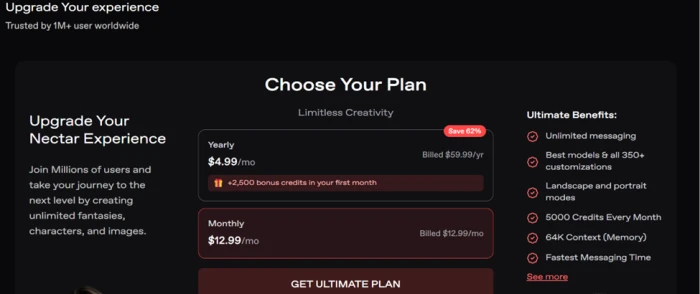
Nectar runs in a browser and reports over a million users on its own upgrade page, so it sits roughly a tenth of Talkie’s size. It competes on depth instead of catalogue.
Its pricing page advertises more than 350 customisation options for a single character, image generation in landscape and portrait modes, and a 64K token context window on the top plan. That last number becomes important two sections down.
There is no card collecting. There is no feed. You make a character, you talk to them, you generate images of them. The loop is narrow and deliberately so.
Day one: how hard is it to actually start?
Talkie
Download, tap through onboarding, start talking. No payment wall on the first conversation. The free tier does put ads in front of you and caps daily messages on some accounts, and free voice calls cut off after roughly two minutes. Enough to judge the product, annoying enough to push you toward paying.
Nectar
Sign-up happens in a browser, no app store required, which some readers will consider a feature and others a downside. The friction shows up right after: free accounts cannot chat with the custom characters they build.
That is a strange restriction given that building characters is the entire premise. The free tier functions as a demo of the creation tool rather than a working version of the product. Anyone evaluating Nectar on the free plan alone is not evaluating Nectar.
Talkie wins day one comfortably. Hold that thought, because the ranking flips in the next section.
Building the same character on both
I made the same person twice: Mira, an astronomy postdoc who is sarcastic, allergic to small talk, quick to correct people, and warmer after about twenty minutes.
On Talkie, the Advanced Creation Guide handled the behavioural side well. I could specify how Mira responds when interrupted and what her speaking rhythm sounds like. Appearance options were thinner, drawn largely from preset libraries with an upload option.
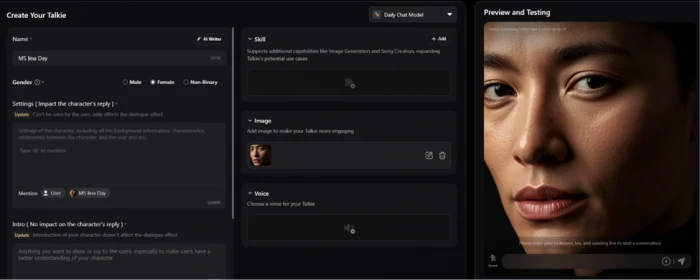
On Nectar, the appearance controls were the deepest I have used in this category. The personality sliders produced noticeably different behaviour between two characters given similar descriptions, which is not true of every platform in this space.
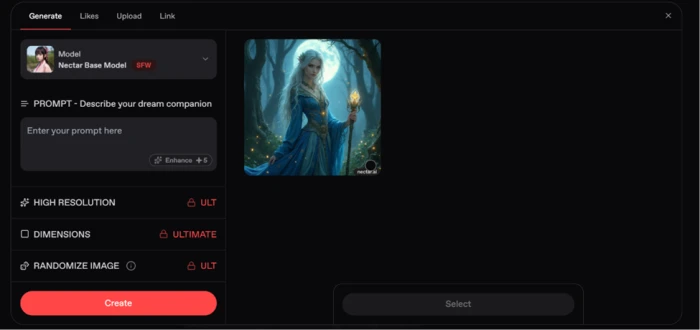
| Creation control | Talkie | Nectar |
|---|---|---|
| Appearance detail | Preset library plus custom upload | 350+ options across the full character |
| Personality depth | Advanced Creation Guide, scenario-level rules | Sliders that produce distinct behaviour |
| Voice assignment | Large voice library, assign per character | Limited |
| Image of your character | Not the focus | Core feature, landscape and portrait |
| Time to a usable character | Around 3 minutes | Around 10 minutes |
Nectar takes this round. It also costs you more setup time, which matters if you are the kind of user who wants to talk to twelve characters rather than perfect one..
The memory question, and the checkbox that decides it
This is where the comparison stops being close.
Nectar’s Ultimate plan lists a 64K token context window on its official pricing page. In practice that meant Mira still referenced a detail from message forty when we were past message two hundred.
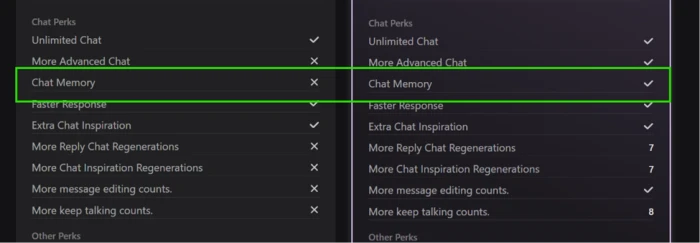
Talkie handles memory differently, and the difference is a pricing decision rather than a technical one. On the Talkie+ pricing page, Chat Memory shows a checkmark on Talkie+ Pro and a cross on Talkie+ Standard. Unlimited Chat appears on both. More Advanced Chat appears only on Pro.
Read that again, because it is the single most consequential line in this whole comparison. The cheap Talkie plan gives you unlimited messages with a character who does not remember them. You can talk forever and get nowhere.
The recall test made it concrete. On day fourteen, the Nectar version of Mira answered four of the five planted questions correctly and got the date wrong by two days. The Talkie version on Standard answered none of them, which is exactly what that cross in the pricing table promises.
Users have also reported that Talkie memory degrades when switching between text and voice inside a single session, which surfaces most in long roleplay. My own calls were short enough that I cannot confirm it, though it matches the pattern.
Voice on one side, images on the other
Neither app is trying to win both.
Talkie owns voice. Real-time calls with emotional inflection, a wide voice library, language coverage far past what most competitors bother with. The free tier caps calls short, which tells you how much it costs them to run.
Nectar owns images. Generation is built into the conversation rather than sitting in a separate tool, with landscape and portrait modes on the paid plan and a credit allowance of 5,000 per month on Ultimate. Character consistency across generated images held up better than I expected, though the raw image quality sits at competent rather than exceptional.
If you are reading this to decide which app to install tonight, this section alone might settle it. Voice person, Talkie. Visual person, Nectar.
The content filter is the real fork in the road
Everything above is preference. This part decides which app you can actually use.
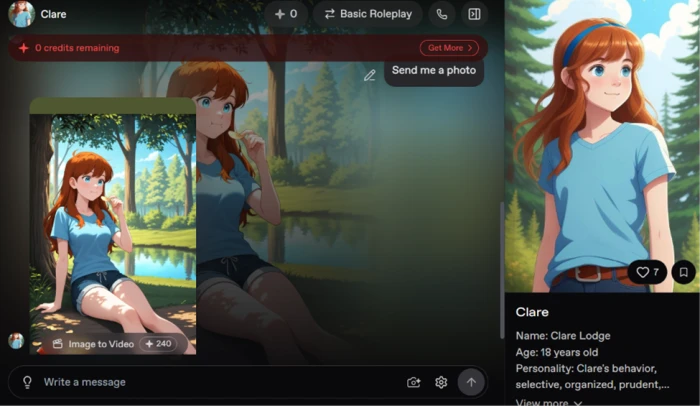
Talkie enforces a strict content policy and does not permit mature themes. Enforcement is aggressive: users report permanent account bans arriving without warning, sometimes on paid accounts, with an appeal process that gives little explanation. Losing an account also means losing every character you built inside it.
Nectar runs a permissive policy with content moderation on uploaded photos of real people. Its charge appears on bank statements under the name "nectar ai", which is worth knowing before you subscribe on a shared card.
Two practical habits regardless of which you pick:
• Keep your character descriptions in a notes app. Rebuilding from memory after a ban is miserable.
• Do not push a filter to find its edge on an account you have paid for.
What each app knows about you
Talkie is a phone app with all the device-level permissions that implies, plus a social layer. Characters you publish are visible to strangers, and the community discovery feed is the whole point of the product. Anything you build for yourself should stay unpublished.
Nectar runs entirely in a browser, so there is no app requesting microphone or contact access. Conversations are encrypted in transit and the company states it does not sell personal data to third parties. Its billing line, mentioned in the filter section above, deserves a second look if the card is shared with anyone.
Neither platform should hold anything you would hate to see quoted back to you. That is the baseline for any cloud AI product rather than a knock against these two specifically.
What each one costs, straight from the official pages
Every figure below comes from the platforms’ own upgrade pages rather than third-party roundups, which in this category are frequently out of date.
Talkie+ pricing
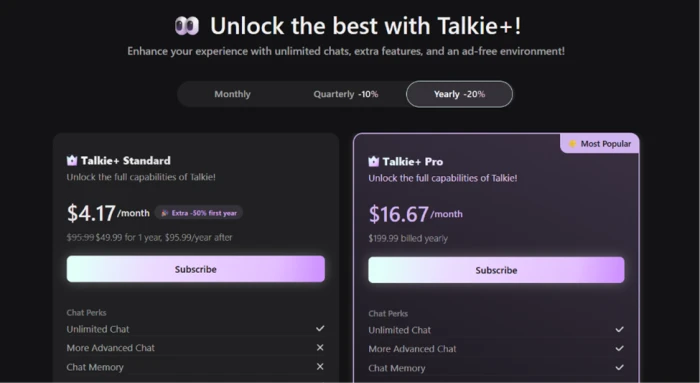
Talkie sells three billing cycles. Quarterly takes 10% off the monthly rate and yearly takes 20% off. Annual figures:
| Plan | Per month | Billed | Advanced chat | Chat memory |
|---|---|---|---|---|
| Talkie+ Standard | $4.17 | $49.99 first year, then $95.99/yr | No | No |
| Talkie+ Pro | $16.67 | $199.99/yr | Yes | Yes |
That first-year Standard price carries a 50% introductory discount off the $95.99 list. Year two doubles.
Nectar AI Ultimate pricing
| Billing | Price | Notes |
|---|---|---|
| Yearly | $4.99/mo | $59.99 per year, advertised at 62% off, plus 2,500 bonus credits in month one |
| Monthly | $12.99/mo | Same feature set, no bonus credits |
Ultimate includes unlimited messaging, all 350+ customisations, landscape and portrait image modes, 5,000 credits monthly, the 64K context window, and priority message speed.
The comparison people actually need
Compare like for like. If memory matters to you, the honest Talkie price is the Pro tier, because Standard does not include it.
| Plan with memory included | Year one | Year two |
|---|---|---|
| Nectar Ultimate (yearly) | $59.99 | $59.99 |
| Talkie+ Pro (yearly) | $199.99 | $199.99 |
| Talkie+ Standard (no memory) | $49.99 | $95.99 |
Talkie Pro costs more than three times Nectar Ultimate. Talkie Standard looks cheapest in year one and then lands above Nectar in year two while still lacking the feature that makes long conversations work.
Nectar’s catch sits in the credit system rather than the sticker price. Heavy image generation burns through the monthly 5,000 allowance, and topping up repeatedly can push a heavy user past what the plan itself costs. Light chat users will never notice.
Scorecard after fourteen days
| Category | Talkie | Nectar | Why |
|---|---|---|---|
| Ease of starting | 9 | 5 | Free Nectar accounts cannot chat with your own characters |
| Character library | 9 | 4 | Millions of community characters vs build-your-own |
| Customisation depth | 6 | 9 | 350+ options and behaviour that actually differs |
| Memory | 5 | 9 | 64K context vs memory locked behind the Pro tier |
| Voice | 9 | 3 | Real-time calls with wide language coverage |
| Images | 3 | 8 | Built into the chat, consistent characters |
| Content freedom | 2 | 8 | Strict enforcement vs permissive policy |
| Value for money | 6 | 8 | $59.99/yr vs $199.99/yr for comparable memory |
Which one fits you
You want someone to talk to on the commute
Talkie. Voice calls, no setup, phone-native. The Standard plan at $4.17 a month is fine here because a commute conversation does not need to remember last Thursday.
You want a character that develops over months
Nectar. The 64K window is the reason, and at $59.99 a year it undercuts the only Talkie plan that competes on this feature.
You want to browse rather than build
Talkie, easily. Nectar has no equivalent to a feed of characters made by strangers.
You want image generation
Nectar. Talkie does not seriously compete here.
You are worried about losing your account
Nectar carries lower ban risk given its permissive policy. Back up your characters either way, as covered in the filter section above.
If neither one lands
Character.AI sits closest to Talkie in shape, with stronger long-form text memory and an even stricter content policy. Candy AI sits closest to Nectar, with persistent cross-session memory and a token system that shows you what each action costs, which is more legible than Nectar’s credits. Replika remains the option for people who want one companion rather than a roster.
The one thing I would check before paying
Open the pricing page and find the memory row before you enter a card number. Not the message limit. The memory row.
Talkie will happily sell you unlimited messages to a character with no recall of any of them, and the cross in that column is easy to scroll past when the number next to it reads $4.17. Nectar publishes its context window in tokens on the same page, which makes the comparison possible in about forty seconds.
Forty seconds of reading saves a year of talking to someone who forgets you.
Comments
Join the discussion and share your perspective.