
A friend of mine cancelled three subscriptions in a single weekend last year. A writing app, a design tool, a research service, and a grammar checker, all gone. Why pay, she reasoned, when one free AI chatbot could do the lot at no charge?
She was far from alone. Hundreds of millions of people made the same swap, trading paid software and paid help for a box that answers almost anything for nothing.
The pitch is hard to argue with. Free writing. Free code. Free research. Free tutoring at 2 a.m. when no human is awake.
Then the second month arrives and the small frictions start to show. A limit hits in the middle of a task. An answer turns out to be confidently wrong. A privacy setting you never opened quietly ships your work somewhere else.
Every free product runs on a business model, and someone is paying for the electricity. When the price tag reads zero, the cost does not vanish. It moves somewhere less visible: into your time, your data, your privacy, and sometimes your professional reputation.
This guide walks through those hidden costs one at a time, using real cases and current numbers instead of scare stories. By the end you will know when free is the smart choice and when it quietly becomes the expensive one.
Why Are AI Tools Free in the First Place?
Nobody runs frontier AI as charity. Training one large model costs hundreds of millions of dollars, and answering a single question spins up a rack of expensive processors. The free tier has to earn its keep some other way.
Four mechanisms do most of that work:
- Acquisition. Free users sit at the top of a funnel. A slice will hit a wall, want more, and upgrade to a paid plan.
- Data. Your prompts and corrections can become training signal that sharpens the next model, which pulls in still more users.
- Scale as a moat. A base of hundreds of millions of active users is a wall that investors and partners pay a premium to sit behind.
- Ad-supported free tiers. Since February 2026, ChatGPT's free tier has shown ads to users in the United States, a blunt answer to the question of how it stays free.
Put those together and a loop appears. Free users supply data and attention. Data improves the model. A better model attracts more users. Some of them pay. Revenue funds the next model. Round it goes.
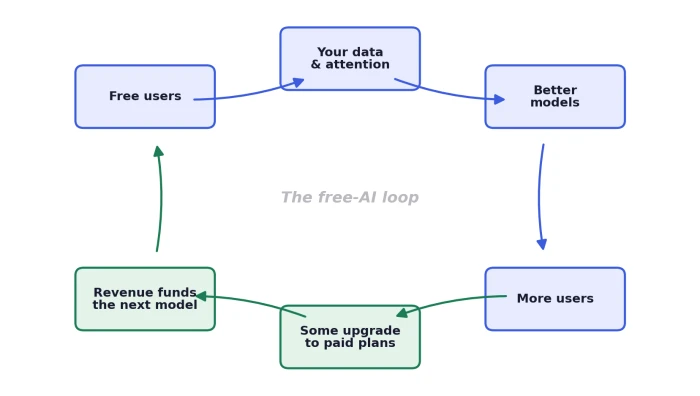
That loop is the whole reason free exists. It also explains every hidden cost below, because each one is a point where the loop pulls value from you rather than the other way around.
What "Free" Actually Costs
Money is the currency you notice. It is rarely the one you spend most of. Free AI is better understood as billed in four:
- Time you spend checking, redoing, and waiting out limits.
- Data you hand over, sometimes without ever opening the setting.
- Quality you give up when the tool routes you to a weaker model.
- Opportunity you lose when the tool does the work your own skills never get to build.
The rest of this piece hangs on those four. Keep them in mind, because most free tools are generous in one currency and quietly expensive in another.
The Hidden Costs, One by One
1. Your Conversations Become the Product
On most consumer free tiers, the default setting lets the company learn from what you type. Google's Gemini is the clearest example. By default, a subset of consumer conversations can be read by human reviewers and used to train Google's models, and reviewed chats are kept for up to three years even after you delete them. Google's own privacy page tells users plainly not to enter anything they would not want a reviewer to see.
That does not mean every AI reads your chats. Anthropic's Claude, by default, does not use your conversations to train its models without permission. The default simply varies by tool, and the free tier tends to be the one tuned to collect the most.
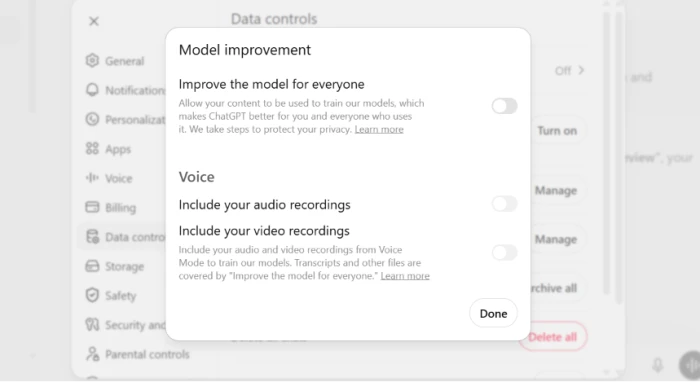
How to limit it: open the privacy settings before your first serious prompt, and turn off training or chat history wherever the option exists.
2. The Verification Tax
This is the cost people feel but almost never measure. AI saves time on the first draft, then asks for some of it back at the checking stage.
The honest version of the math is conditional. For a low-stakes task, a birthday message or a rough outline, verification is near zero and the time saved is real. For anything factual or high-stakes, the checking can equal or exceed the time saved. A 15-minute draft that needs 25 minutes of fact-checking has cost you ten minutes against writing it yourself, plus the risk that you trust it and skip the check entirely.
The tax scales with stakes. The more a wrong answer would cost, the more verification it demands, and the thinner the net saving becomes.
3. You Are Often Not Using the Best Model
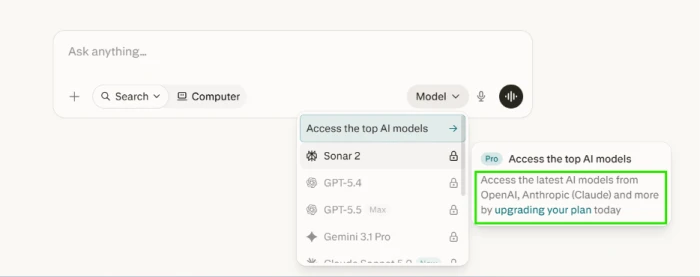
Free rarely means the flagship model all day long. On ChatGPT's free tier in 2026, users get roughly 10 messages every five hours on the default model before being dropped to a lighter mini version until the window resets. Free accounts also run on a smaller context window, around 16K tokens against 32K on the paid Plus tier, so the free model loses track of the earlier parts of a long document sooner.
You are not always told when the downgrade happens. The chat keeps flowing. The answers just get shorter, shallower, and more likely to drop the thread.
4. Interruptions and Rate Limits
Caps do more than lower quality. They break flow. A limit that lands in the middle of a task forces a context switch, and context switches are where deep work goes to die.
Free tiers are throttled hardest during busy hours, which happen to be the hours you are most likely working. The interruption is rarely a hard stop. It is a downgrade or a countdown, arriving at the worst possible moment.
5. The Free-to-Paid Squeeze
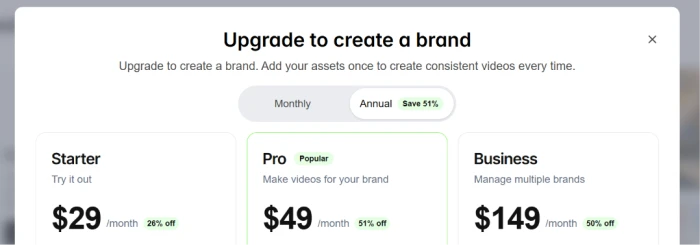
Free today, gently steered toward paid tomorrow. The pattern is familiar. Image generation caps out after a couple of pictures a day. Deep research is metered. File uploads are limited. The strongest model sits one click and one payment away.
None of this is a scam. It is the funnel from the first section working exactly as designed. The trap is emotional rather than financial: once a free tool is woven into your daily routine, the upgrade stops feeling optional.
6. Confidential Information Can Walk Out the Door
Here personal caution and professional risk part ways.
For an individual, the risk is a reviewer or a future model seeing something private you pasted in. For a business, the stakes climb fast. Client documents under an NDA, unreleased financials, proprietary source code, and internal strategy can each breach a contract the moment they enter a tool whose free tier trains on input. A number of companies have restricted staff use of public chatbots for precisely this reason.
How to limit it: keep anything covered by an NDA or client confidentiality out of consumer free tiers entirely. Treat the chat box like a public forum, because on the wrong setting that is close to what it is.
7. Hallucinations With a Price Tag
An AI that invents a fact never warns you. It states the invention with the same confidence as the truth, and that confidence is what makes it costly. The cases are no longer hypothetical:
- Mata v. Avianca, 2023. A New York lawyer submitted a brief citing six court cases that ChatGPT had entirely made up. The judge called it unprecedented, and sanctions followed.
- Air Canada, 2024. The airline's chatbot invented a bereavement-fare refund policy that did not exist. A grieving customer relied on it, and a tribunal ordered Air Canada to pay him C$812.02, rejecting the argument that the bot was a separate entity responsible for its own words.
- A California lawyer, 2025. An attorney used ChatGPT to polish an appeal. The court found 21 of 23 case quotations fabricated and fined him $10,000, one of the largest such penalties in the state.
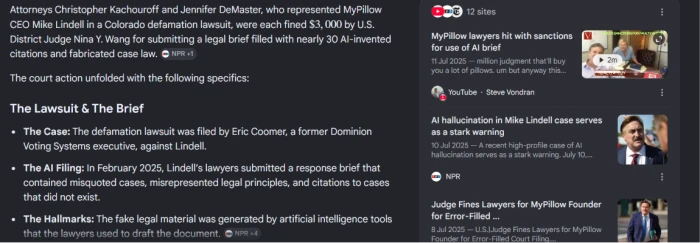
- The MyPillow case, 2025. Two lawyers were fined $3,000 each for a court filing riddled with AI-invented citations.
These are not fringe events. One researcher who tracks the pattern went from logging two such cases a week to two or three a day during 2025, with more than 600 recorded across US courts. A Stanford study found general chatbots hallucinating on a large share of legal queries. The pattern is consistent: a cheap-looking tool produced an answer that cost real money to have trusted, from a few hundred dollars in refunds to five-figure court fines.
8. Skill Atrophy
This is the cost that shows up slowest and lasts longest.
Every task you hand fully to AI is a rep you skip yourself. Write every email with a prompt and your own voice stops developing. Let it structure every argument and your instinct for structure goes rusty. Accept every block of code without reading it and your debugging sharpens far more slowly than it would have.
This is not a claim that AI makes people less capable by some law of nature. Plenty of experts use it to move faster while staying sharp. The risk is narrow and specific to overreliance: when the tool replaces the practice instead of supporting it, the underlying skill quietly stops growing.
9. Vendor Lock-In
The more you invest in one tool, the more it costs to leave. A library of tuned prompts, workflows shaped around one interface, a team trained on one product, and integrations wired into one company's format all become switching costs.
When the free tier changes its limits or the paid tier raises its price, you find out how much that comfort was worth. Lock-in is never dramatic. It is the slow accumulation of reasons to stay put even after a better or cheaper option appears.
10. Who Owns What You Make?
When AI helps produce a logo, an article, a block of code, or a marketing image, ownership and commercial rights get murky, and the answer lives in each platform's terms rather than in common sense. Some tiers grant broad usage rights. Others restrict commercial use or stay silent on who owns the output.
For a hobby project this rarely matters. For anything you plan to sell or build a business on, the licensing terms of a free tool deserve a careful read before you ship. I am not offering legal advice here; the practical move is to read the specific tool's terms and, for anything high-stakes, ask someone qualified.
11. The Opportunity Cost Nobody Prices In
Most comparisons pit free AI against paid AI. The more revealing comparison is free AI against learning the skill yourself.
If AI writes every email, you never become a better writer. If it handles every calculation, your fluency with numbers fades. The tool that saves you an hour today can cost you the compounding value of a skill you would have built over a year. That cost appears on no pricing page. It is the most expensive line item in the whole list, and the only one with no invoice.
Hidden Costs by User Type
The same trade-offs land differently depending on where you sit. Here is the list seen from six chairs.
| User type | Biggest win from free AI | The cost that bites hardest |
|---|---|---|
| Students | 24/7 explanations and tutoring | Skill atrophy: getting the answer without the method |
| Freelancers | Free tools that replace paid software | Verification time and unclear rights on output |
| Agencies | Fast first drafts across many clients | Client-confidentiality and NDA exposure |
| Developers | Quick code and instant debugging help | Insecure or subtly wrong code accepted unchecked |
| Businesses | Zero-cost productivity across teams | Data leakage and legal liability for AI errors |
| Content creators | Endless ideation and drafting | Ownership questions and everyone sounding the same |
Two patterns cut across the table. Students and creators pay mostly in skill and originality. Agencies and businesses pay mostly in confidentiality and liability. Knowing which chair you sit in tells you which cost to watch first.
Free AI vs Paid AI: Is Paying Worth It?
Paid is not automatically better at everything, and free is not automatically weak. Free tiers of frontier models are genuinely capable now. Capabilities also shift between providers and month to month, so read this as a snapshot of where the lines usually fall in 2026 rather than a fixed rule.
| Feature | Free tier (typical) | Paid tier (typical) |
|---|---|---|
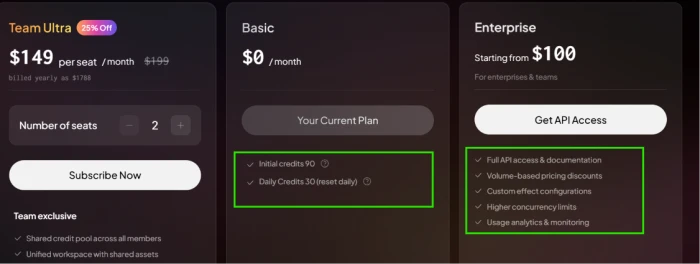
| Monthly cost | $0, sometimes ad-supported | Around $20 and up |
| Model access | Flagship for a short window, then a lighter fallback | Flagship access with far higher limits |
| Message limits | Tight rolling caps (e.g. ~10 per 5 hrs) | Much higher, sometimes effectively unlimited |
| Context window | Smaller (e.g. ~16K tokens) | Larger (e.g. 32K and up) |
| Speed at peak times | Throttled first under load | Prioritised |
| Advanced features | Limited or metered | Deep research, higher file limits, extra tools |
| Data defaults | Often used to improve the product | Sometimes more privacy control |
The honest summary: free tiers are strong for occasional and low-stakes work. Paid tiers earn their fee once the work turns heavy, whether that means daily use, long documents, tight deadlines, or anything where an interruption or a downgrade costs real money.
How to Use Free AI Without Paying the Hidden Costs
You can keep the free tier and dodge most of the costs above with a short routine. Treat this as a checklist, not a lecture.
- Keep confidential material out. No NDA documents, no client data, no unreleased work, no source code you do not own.
- Verify anything that matters. Treat every fact, quote, citation, and number as a draft until checked against a real source.
- Read the privacy setting once. Turn off training and history where the option exists, before your first real prompt.
- Save your prompts locally. A prompt library you own travels with you and softens lock-in.
- Learn the limits. Know your reset window so a cap never ambushes you mid-task.
- Check the licence before you sell. For commercial work, confirm who owns the output.
- Keep your own hand in. Use AI to draft and speed up, not to retire the skills you want to keep.
- Treat it as an assistant, not an authority. The final judgment stays with you.
Key Takeaways
So here is the rule I use: match the tool to the stakes.
For low-stakes and occasional work, free tiers of frontier models are excellent and the hidden costs stay small. For professional work, confidential material, or anything a wrong answer would make expensive, the free option is often the costly one, and a paid plan or a different workflow pays for itself quickly.
The price tag was never the real number. Before you lean on a free tool for anything that matters, work out which of the four currencies it is charging you, then decide whether that is a bill you actually want to pay.
Comments
Join the discussion and share your perspective.