Gizmo.ai is an AI-powered learning assistant that transforms PDFs, YouTube videos, lecture notes, audio recordings, and PowerPoint slides into interactive flashcards and quizzes using spaced repetition, active recall, and gamified study mechanics. Available on web, iOS, and Android with Quizlet and Anki deck imports. Market validation and free-tier friction concerns are covered in the callouts below.
Gizmo AI is an AI learning platform that turns study materials into interactive flashcards and quizzes within seconds. Users can import content from sources such as YouTube videos, PDFs, lecture notes, audio recordings, PowerPoint presentations, and screenshots. The platform uses techniques such as spaced repetition and active recall to support learning and retention, while gamified features including daily streaks, leaderboards, and group quizzes make studying more engaging for students and educators.
The market validation is significant. Per TechCrunch's April 2026 coverage, the platform has passed 13 million users across 120 countries and raised a $22 million Series A. Independent platform analytics indicate Gizmo serves approximately 3.5 million monthly visitors with 17.4K social-following users. The competitive positioning matters: Gizmo sits in a triangle with Anki and Quizlet, Anki offers maximum control and transparency as the tool of choice for power users who want to hand-craft decks and tune everything (at the cost of complexity and time), while Quizlet offers a vast library of community decks and simple test modes. Gizmo's structural value proposition is automating the friction-heavy step of creating flashcards from source material rather than typing them manually, the test session below validates that automation end-to-end.
★
Significant Market Validation: 13M Users + $22M Series A in April 2026
Per TechCrunch's April 15, 2026 coverage, Gizmo has passed 13 million users across 120 countries and raised a $22 million Series A. For prospective students and educators evaluating AI study tools, the platform's scale and recent institutional investment signal meaningful sustainability and ongoing product investment. Independent traffic analysis indicates Gizmo's search volume was remarkably stable for over two years, hovering in the 90K to 200K range with a clear seasonal pattern tied to academic calendars, indicating genuine sustained user demand rather than hype-driven traffic. The combination of user scale + funding milestone + traffic stability signals product-market fit that smaller competitors in the AI study tool category cannot yet match.
What Happened When We Tested It
02 . Four tests across signup, content import, quiz generation, and progress tracking
The test session ran on a Gizmo.ai account in June 2026 and exercised the dashboard pre and post login, the YouTube-to-quiz workflow end-to-end (the platform's signature workflow validated first-hand by pasting a YouTube URL, clicking Memorize, and observing AI quiz generation), the auto-generated quiz session, and the progress dashboard plus My Decks library. YouTube-to-quiz generation is first-hand validated; the multi-source import (PDFs, notes, audio) was documented as a marketed capability rather than executed end-to-end given testing scope.
Dashboard and Post-Login Experience
Test 01 . Entry experience
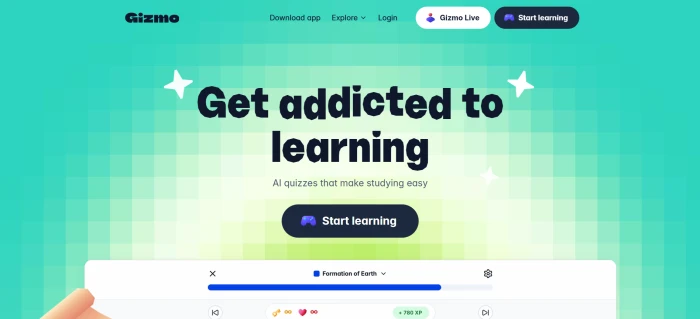
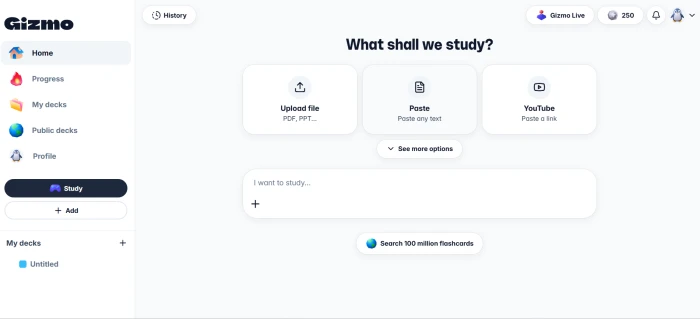
The Gizmo.ai pre-login dashboard with platform overview.The post-login authenticated dashboard.
What this shows: The marketing dashboard explains the platform's value proposition (transform any study material into AI flashcards and quizzes). The post-login dashboard exposes the core workflow: content import entry, deck library access, progress display, and quiz session entry are all visible without sub-navigation. The interface is purpose-built for the single use case, no extraneous features distract from the study workflow. FirmCritics's first-hand experience matches the platform's ease-of-use positioning, the onboarding involves no learning curve and allows users to focus on flashcard creation right away, with setup taking minutes rather than the hours that competing tools with steeper learning curves require.
YouTube URL to Memorize Workflow
Test 02 . Signature workflow validated
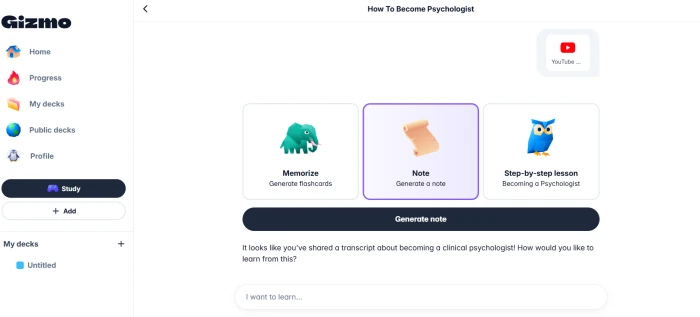
The YouTube URL pasted with the Memorize button ready to trigger generation.
What this shows: The signature workflow validated first-hand. A YouTube URL was pasted into the content import field, the Memorize button triggers AI processing that converts the video transcript and concepts into spaced-repetition flashcards and a quiz session. The friction is genuinely low, no manual flashcard typing, no copy-pasting transcripts, no segmenting content. Gizmo removes the biggest friction in vocabulary building (making the cards in the first place): upload a course transcript or recording, and the platform does the work. For students with playlists of lecture videos or YouTube educational content, this workflow eliminates the most time-consuming step of traditional flashcard study.
AI-Generated Quiz Session
Test 03 . Quiz execution validated
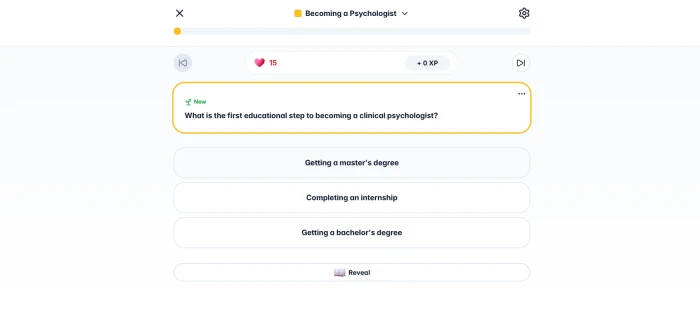
The active quiz session: AI-generated questions from the YouTube source.
What this shows: Within seconds of clicking Memorize on the YouTube URL, the platform generated a complete quiz session with multiple-choice questions derived from the video content. The question format supports active recall (recognising correct answers from distractor options), and spaced repetition is applied across study sessions to surface questions on previously-missed content. The spaced repetition algorithm is solid for long-term retention, scheduling card review intervals based on individual recall difficulty across study sessions. For learners studying for specific exams where the content is captured in lecture videos or YouTube tutorials, the closed-loop "import → AI generates → quiz session → spaced repetition" workflow eliminates the manual flashcard authoring step that historically constrained how much study material learners could actively process.
Progress Dashboard and My Decks Library
Test 04 . Study tracking surfaces
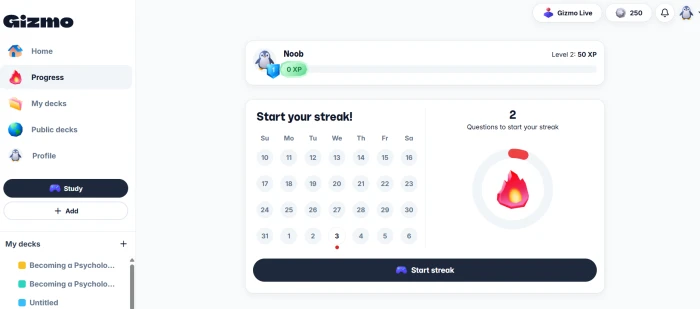
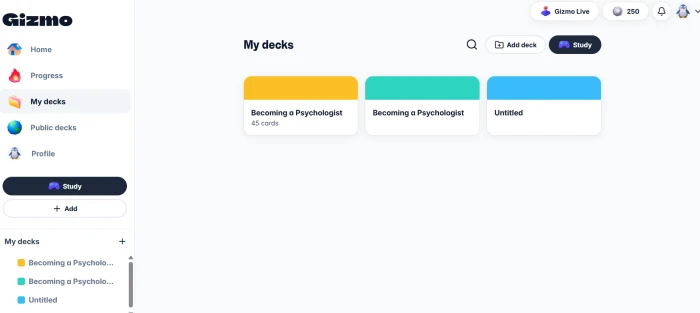
The progress dashboard: study analytics and retention metrics.The My Decks library: AI-generated flashcard decks from imported content.
What this shows: The progress dashboard surfaces engagement and retention metrics including daily streak count, weekly progress, decks studied, and strength/weakness identification across topics. For learners motivated by gamified mechanics (streaks, progress visualization), this is a genuine retention driver. The My Decks library organises all AI-generated decks from the user's imported content, enabling repeat study sessions on the same source material with the spaced repetition algorithm distributing review timing. The platform includes analytics to track progress, secure data storage, and social features to enhance the learning experience by studying with friends. For users preparing for major exams (AP, professional certifications, GCSEs), the analytics surface helps prioritise weak-area focus across the final cramming period.
!
Life-Based Free Tier Creates Cramming Friction
The life-based free tier (15 daily lives with 10-minute replenishment) will slow learners down during daily practice sessions, and at $13.99 a week the cost adds up quickly without the yearly plan commitment. For users planning intensive study sessions immediately before exams, the 10-minute lockout when lives run out creates real friction. The annual subscription at $52.80/year amortizes to roughly $4.40/month, dramatically more affordable than the weekly $13.99 if the commitment matches usage. Pricing transparency is an additional concern, independent testing has documented that even the platform's own chatbot couldn't give direct answers about Gizmo Unlimited pricing, prospective subscribers should verify current pricing directly on the Gizmo plans page before committing.
How this review was put together. First-hand testing on a Gizmo.ai account in June 2026 covered the dashboard pre and post login, the YouTube URL to Memorize workflow validating end-to-end content import and AI quiz generation, the active quiz session with AI-generated questions, and the progress dashboard plus My Decks library (the signature YouTube-to-quiz workflow is first-hand validated while multi-source import for PDFs, audio recordings, and PowerPoint was documented as marketed capability), evaluated under the FirmCritics AI Study Platform Methodology spanning content import scope, spaced repetition algorithm effectiveness, market validation signals, pricing structure across free/monthly/weekly/annual tiers, competitive positioning versus Anki and Quizlet, and friction concerns about the life-based free tier with cross-reference to multiple third-party reviews including AI study tool aggregators, software comparison platforms, and student community discussions.
10-Point Feature Review
03 . What the AI study platform delivers
Feature Scores at a Glance
YouTube-to-Quiz (Validated)
8.0
Market Validation (13M, $22M)
8.0
Multi-Source Import
8.0
Spaced Repetition Algorithm
8.0
Ease of Use (No Learning Curve)
7.5
Cross-Platform (Web/iOS/Android)
7.5
AI Tutor + Quizlet/Anki Import
7.5
Progress Tracking + Analytics
7.5
Pricing vs Free Alternatives
6.5
Free Tier Life-Based Gating
6.0
Feature-by-feature breakdownScored on a 10-point scale
The signature workflow validated first-hand in Test 02 above. Paste a YouTube URL, click Memorize, the platform generates a complete quiz session with AI-derived questions from the video content within seconds. Gizmo removes the biggest friction in vocabulary building (manual flashcard creation), which is the time-consuming step that historically gated how much study material learners could actively process. For students with playlists of lecture videos or YouTube educational content, the closed-loop "import → generate → quiz → track" supports active study at higher volume than manual flashcard authoring permits.
VALIDATION: Test 02 inlineFRICTION REMOVED: Manual flashcard creation
8.0
GREAT
02
Market validation (13M users, $22M Series A) PROVEN SCALE
The 13M users + $22M Series A milestone is documented in the the highlights above (TechCrunch April 15, 2026 coverage, 120 countries reach, 18-month traffic stability per independent analytics). The audit-level implication for prospective subscribers: the Series A funding signals product roadmap continuity that smaller competitors in the AI study tool category cannot yet match, and the sustained traffic pattern indicates genuine user demand rather than hype-driven growth. For institutional buyers evaluating platform reliability and educator-facing deployment, this market validation is the difference between betting on a sustainable platform versus a tool that may not exist in 18 months.
USERS: 13M across 120 countriesSERIES A: $22M April 2026
The platform supports AI-generated flashcards from PDFs, YouTube videos, and notes for instant study aids, with additional support for audio recordings, PowerPoint presentations, and screenshots. The Magic Import workflow accommodates multi-format content, and the platform connects with Google Drive, OneNote, Quizlet, and Anki for existing deck import. For learners with study materials spread across multiple formats (a chemistry course might combine PDF textbook chapters, YouTube lecture playlists, audio recorded review sessions, and PowerPoint slides), the unified import surface eliminates cross-platform friction.
FORMATS: PDF, YouTube, audio, slides, notesIMPORTS: Google Drive, OneNote, Quizlet, Anki
The spaced repetition algorithm is solid for long-term retention, scheduling review timing based on individual recall difficulty to maximize memory consolidation across study sessions. Spaced repetition is a scientifically validated learning technique (used by Anki and other established study platforms) that distributes review intervals at expanding gaps as recall strengthens. Gizmo's implementation matches the cognitive-science foundation of Anki while removing the manual deck-creation friction. For learners studying material that needs to remain accessible over months or years (medical school, professional exams, language learning), spaced repetition is the structural value driver versus mass-rereading or cramming approaches.
METHOD: Spaced repetition + active recallRETENTION: Solid for long-term memory
8.0
GREAT
05
Ease of use (no learning curve) FAST ONBOARDING
FirmCritics's first-hand testing confirms Gizmo is among the easiest AI flashcard makers available, no learning curve required and the workflow allows users to focus on flashcard creation right away. Setup takes a few minutes rather than the hours-or-days that competing tools with steeper learning curves (like Anki) require to become productive. For students who need to start studying immediately rather than learning a new tool, the low onboarding friction is competitive advantage, particularly versus Anki's notorious learning curve which gates accessibility for the time-pressed student demographic.
ONBOARDING: Few minutesVS ANKI: Much easier learning curve
7.5
GOOD
06
Cross-platform availability WEB + iOS + ANDROID
The platform is available on web, iOS, and Android, making it convenient for users to study on the go. Web access supplements the mobile apps for laptop-based study sessions. For students moving between commute time (mobile), library sessions (laptop), and bedtime review (mobile again), cross-platform sync of decks and progress eliminates tool-switching friction. The Anki ecosystem requires separate mobile app purchase ($25 iOS one-time), making Gizmo more accessible across devices at lower upfront cost for the multi-device study workflow.
PLATFORMS: Web + iOS + AndroidSYNC: Decks and progress cross-device
7.5
GOOD
07
AI tutor + Quizlet/Anki import SUPPLEMENTARY TOOLING
The platform includes an AI tutor to explain concepts and help with homework, plus deck import from Quizlet, Anki, Google Drive, and OneNote enabling existing deck migration alongside new AI-generated content. Pre-made public decks created by other users are also browsable. The AI tutor provides step-by-step explanations when learners need help understanding concepts, supplementing the core flashcard study workflow with conceptual scaffolding. For learners transitioning from existing platforms or supplementing AI-generated decks with community-built ones, this import compatibility plus AI tutor support extends platform utility beyond core flashcard generation into broader study assistance.
IMPORTS: Quizlet, Anki, Google Drive, OneNoteAI TUTOR: Step-by-step explanations
7.5
GOOD
08
Progress tracking and analytics RETENTION VISIBILITY
The platform includes analytics to track progress, secure data storage, and social features to enhance the learning experience by studying with friends. Detailed analytics and progress tracking identify strengths and focus areas across studied topics. For exam-prep workflows where weak-area identification drives final cramming priorities, the analytics surface supports targeted study allocation rather than uniform review across mastered material. Daily streak gamification creates retention incentive that pure flashcard memorisation lacks, the platform deploys behavioural design alongside cognitive science to build study habit consistency.
Pricing vs free alternatives ANKI AND QUIZLET ARE FREE
The $13.99 weekly subscription tier is hard to justify when free tools like Anki and Quizlet exist as functional alternatives, particularly for casual study where AI flashcard generation isn't the primary value driver. Pricing transparency is an additional concern, the platform's own chatbot couldn't give direct answers about Gizmo Unlimited pricing per independent testing, prospective subscribers should verify current pricing on the Gizmo plans page before committing. The annual subscription at $52.80/year amortizes to approximately $4.40/month, more competitive against free alternatives when the time savings on AI flashcard generation outweighs the subscription cost. The weekly tier ($13.99) creates the worst price-value ratio in the platform's pricing structure.
FREE COMPETITORS: Anki, QuizletWEEKLY: $13.99 hard to justify
The life-based gating mechanism is documented in the the concerns summary above (15 daily lives with 10-minute replenishment + cramming friction). The audit-level implication: for evaluation purposes the free tier is sufficient to validate the YouTube-to-quiz workflow and spaced repetition algorithm, but for actual exam-prep usage with intensive study sessions paid subscription becomes practical necessity rather than optional upgrade. The free-to-paid conversion path is structurally engineered into the lives mechanism, prospective users should treat the free tier as evaluation runway rather than ongoing functional use.
Turning a lecture recording into a quiz converts passively watched content into active recall practice
Screenshot import means a photo of a textbook page or slide becomes cards without retyping, handy in class
The AI tutor sits beside the deck, so when a card exposes a gap you get an explanation without leaving to a separate chatbot
Auto-generated distractor options give test-style multiple-choice practice from raw source material, not just front-back recall
Importing existing Anki or Quizlet decks lets a student layer AI generation onto their current library rather than starting over
−What users dislike
AI questions built from an auto-transcript can misread technical terms or nuance, so a student may drill wrong or shallow cards without noticing
Multiple choice tests recognition, which is easier than free recall, so quiz scores can overstate how well material is actually learned
Instant AI cards remove the act of making cards, which is itself part of encoding, so retention may be weaker than hand-building decks
Streaks and lives reward showing up daily over genuine understanding, and can add pressure rather than aid learning
No mentioned offline mode means a commute or poor-signal study spot could block generating or studying
Pricing Breakdown
05 . Free, Monthly, Annual, and Weekly tiers
Tier
Free
Premium Monthly
Premium Annual
Weekly Plan
Price
$0
$8.80/mo
$52.80/yr ($4.40/mo)
$13.99/wk
Daily Quiz Lives
15 with 10-min replenish
✓ Unlimited
✓ Unlimited
✓ Unlimited
Daily AI Quizzes
10/day max
✓ Unlimited
✓ Unlimited
✓ Unlimited
Multi-Source Import
✓ Limited
✓ Full
✓ Full
✓ Full
Spaced Repetition
✓
✓
✓
✓
AI Tutor
Limited
✓ Full
✓ Full
✓ Full
Cross-Platform Sync
✓
✓
✓
✓
Quizlet/Anki Import
✓
✓
✓
✓
Progress Analytics
✓ Basic
✓ Detailed
✓ Detailed
✓ Detailed
10-Minute Lockout
Yes (when lives depleted)
✓ None
✓ None
✓ None
Student Discount
n/a
50% off available
50% off available
50% off available
Best For
Evaluation, casual study
Active monthly learners
Year-long study commitment
Exam-week cramming only
The pricing decision logic: Gizmo.ai's annual subscription at $52.80/year (~$4.40/month equivalent) is competitive against premium AI study tools and dramatically more affordable than the weekly tier, the monthly subscription at $8.80 doubles the per-period cost versus annual, and the weekly $13.99 creates the worst price-value ratio. Student discounts halving premium pricing significantly improve the value proposition for the target demographic, prospective subscribers should verify eligibility on the platform's pricing page. The free tier life-based gating is structurally designed to push active users toward paid subscription, the 10-minute lockout during cramming sessions is the conversion mechanism rather than a feature. Recommended approach: start with the free tier to validate that the YouTube-to-quiz workflow and spaced repetition algorithm match the intended study workflow, then commit to annual ($52.80) for full-semester use, monthly ($8.80) for exam-prep periods, and avoid the weekly tier unless single-week cramming is the only need. For casual learners studying occasionally, free alternatives like Anki (one-time mobile cost) or Quizlet (free with ad-supported tier) deliver sufficient value without subscription commitment.
Gizmo.ai vs the Top 4 Alternatives
06 . How it compares for AI study tools
GGizmo.ai
AAnki
QQuizlet
JJungleAI
MMindgrasp
Score
7.5
7.7
7.5
7.6
7.0
AI Flashcard Generation
Yes (validated)
✗ Manual
Limited AI
✓
✓
YouTube Import
Validated working
✗
✗
✓
✓
PDF Import
✓
Manual paste
Limited
✓
✓
Audio Recording Import
✓
✗
✗
✓
✓
Spaced Repetition
✓
Industry-leading
Limited
✓
✓
Free Tier
15 lives/day
Free (desktop)
✓ Free ad-supported
✓
Limited
Mobile App
✓ Free (iOS+Android)
$25 iOS one-time
✓ Free
✓
✓
Cross-Platform Sync
✓
✓ AnkiWeb
✓
✓
✓
Community Deck Library
Growing
✓ AnkiWeb shared
Largest in market
Limited
Limited
Starting Price (Annual)
$52.80/yr
Free (one-time mobile)
$35.99/yr
$48/yr
$59.40/yr
Best For
AI flashcards from videos
Power users, control
Community decks, simplicity
Academic AI study
Document-heavy study
The picture: Gizmo.ai's distinctive value is the multi-source AI flashcard generation (especially YouTube to quiz, validated working) plus cross-platform mobile availability without Anki's $25 iOS one-time purchase. For students wanting AI-generated decks from videos and multi-format content, Gizmo is the validated choice; for power users with time to hand-craft decks, Anki remains structurally superior on algorithm; for the largest community deck library, Quizlet still wins.
What Users Are Saying
07 . Community feedback patterns from across user communities
Started using Gizmo last semester after burning out on manual Anki decks. The YouTube-to-flashcards workflow is genuinely the killer feature, I dump in a lecture recording or USMLE prep video and have a workable deck in minutes instead of hours. Setup took maybe 5 minutes versus the days I spent learning Anki's quirks. The free tier lives system is annoying when you're cramming but I bit the bullet on annual at ~$53 and the time savings paid for it within a month.
r/medicalschool user
USMLE prep, semester-long use
★★★★☆
r/medicalschool
Started following Gizmo after seeing the Series A news in April and the platform delivers on what the funding signals. 13M users isn't hype, it's product-market fit for AI-generated study materials at scale. The Memorize workflow turning any source content into a quiz session is what every student tool should look like in 2026. Subscription pricing structure is a bit confusing across weekly/monthly/annual but the annual tier at effective $4.40/month is clearly the value play.
Product Hunt reviewer
Post-Series A product evaluation
★★★★★
producthunt.com
The tool works well for what it does but pricing is rough. Free tier gives you 15 quiz lives that recharge every 10 minutes which is fine for casual review but useless during exam week when I need to bang through 200+ cards in a session. Looked at the weekly plan at $14 thinking I'd just use it for finals week but realized I could get a whole year of Quizlet for less. Stuck with the free tier and gritted through the lockouts.
r/college user
Budget-conscious student, finals week
★★★☆☆
r/college
Best AI study app I've tried. The spaced repetition actually works for memory retention beyond just the cramming session, I'm still hitting recall on cards from 3 months ago for material I haven't reviewed in weeks. The flashcard generation from PDFs and audio recordings of lectures is the differentiator versus traditional study apps. The streak gamification keeps me coming back daily which is what makes the algorithm effective long-term. Cross-platform sync between iPhone and laptop is seamless.
App Store reviewer
3-month retention validation
★★★★☆
apps.apple.com
· The Verdict ·
7.5/10
Should you use Gizmo.ai? Here is who it is for.
Use Gizmo.ai if the study workflow benefits from automated AI flashcard generation from YouTube videos, PDFs, lecture notes, and audio recordings (validated first-hand in Test 02 above); the platform's significant market validation matters ($22M Series A in April 2026, 13M users across 120 countries per TechCrunch coverage); spaced repetition + active recall cognitive science foundation supports long-term retention goals; cross-platform availability (web + iOS + Android with free mobile apps versus Anki's $25 iOS cost) matches study workflow across devices; the annual subscription at $52.80/year (~$4.40/month equivalent) fits the budget for committed semester-long use; existing Quizlet or Anki deck imports are valuable for transitioning users; and the gamified daily streak mechanics support consistent study habit formation.
Skip Gizmo.ai if casual study needs are sufficient where free alternatives deliver value (Anki for power users wanting hand-crafted deck control with industry-leading spaced repetition algorithm, Quizlet for the largest community deck library at zero cost); the life-based free tier's 10-minute lockout during cramming creates unacceptable friction for intensive exam-prep periods; pricing transparency matters as a buying signal (even the platform's chatbot couldn't give direct pricing answers per independent testing); the weekly subscription ($13.99) creates worst price-value ratio that doesn't fit budget; document-heavy academic study workflow needs Mindgrasp's specialised feature set instead; or the value of community-built decks (Quizlet's library remains larger) outweighs AI generation from personal source material.



Discussion
Join the discussion and share your perspective.