
Home / Reviews / NSFW AI / PepHop AI
AI Character Platform Report/Block Safety Character Creation 40% Affiliate Program Hidden Create UX

Pephop AI Review

https://pephop.ai · Pephop AI

Pephop.ai is an AI character chat platform with public character library, character creation tools, report/block safety controls on character profiles, and a 40% affiliate program. The test session below validates working chat with public characters and user-created characters, surfaces a hidden create character UX behind the profile dropdown, and notes category-wide privacy and moderation concerns standard across AI roleplay platforms.

FirmCritics Score
5.8
/10
Mixed Bag
Safety controls offset
by hidden create UX
Report/Block Safety Infrastructure7.5
Validated Chat Workflow7.0
Character Creation Depth6.0
UI/UX Polish5.5
Privacy Transparency5.0
Platform Type
Freemium AI character chat
Safety Controls
Visible report/block on profiles
Character Creation
Yes hidden in profile menu
Public Library
Yes browsable from homepage
Affiliate Program
Up to 40% referral commission
Age Verification
Self-declared category-standard

What Pephop.ai Does

01 . Overview

Pephop.ai is a web-based AI character chat platform combining a public character library, character creation tools, and one-on-one chat sessions under one workflow. The public library exposes community-created characters browsable from the homepage, character profiles include report and block safety controls that allow users to flag inappropriate content or block specific characters from their discovery feed. The chat workflow operates on the platform's connected LLM infrastructure with conversation state persisted across sessions.

Character creation is accessible through a dropdown menu under the user profile icon rather than from primary navigation, exposing fields for appearance, personality, backstory, and conversation parameters. The platform operates on a freemium model with public library access free and additional features unlocking through subscription or referral credits earned through the affiliate program offering up to 40% commission on user referrals. Age verification is self-declared at signup consistent with category-standard practice across AI character platforms.

What Happened When We Tested It

02 . Seven tests across homepage, character detail, chat, affiliate, hidden UX, creation, and validation

The test session ran on Pephop.ai in June 2026 and exercised the homepage with character library entry, the character detail page with visible report/block safety controls, validated chat workflow with a public character, the affiliate program with 40% commission positioning, the hidden create character UX accessible through profile dropdown menu, the character creation dashboard with personality and backstory fields, and the completed user-created character ready for chat with validation of the end-to-end pipeline. The visible report/block safety controls and the hidden create character UX are the dominant editorial findings.

Homepage Entry

Test 01 . Library entry point

Pephop.ai homepage showing AI character chat platform with public library browsing character discovery and roleplay value proposition with community-created character entries
The Pephop.ai homepage with character library entry surface.
What we observed: The homepage exposes the platform's AI character positioning with the character library browsable from the entry point. The marketing surface establishes platform expectations: AI character chat with community-generated library access. For prospective users wanting to evaluate platform breadth, the homepage provides reasonable discovery surface without immediate signup gating, though account creation is required for full chat functionality consistent with category-standard practice.

Character Detail with Report/Block Controls

Test 02 . Safety infrastructure
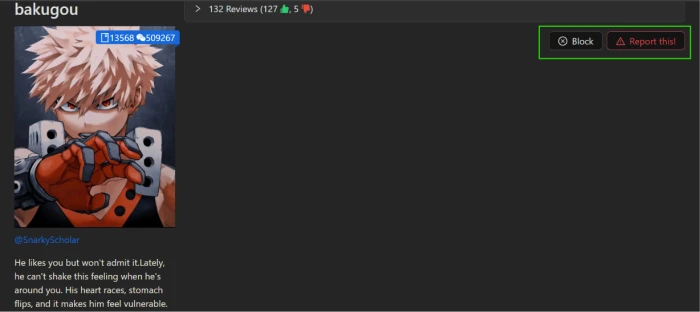
Pephop.ai character detail page showing character bio profile information report block safety controls and chat entry interface with visible community safety tooling
The character detail page with visible report/block safety controls.
What stood out: Character profile pages expose character bio, personality summary, and notably visible report and block safety controls. The presence of report/block infrastructure at the character profile level is rare in the AI character platform category, several competitors hide safety controls behind nested settings menus or omit them entirely. For users prioritising visible safety tooling, this is editorial strength worth noting against category peers. The report function allows community-driven flagging of inappropriate characters while the block function gives users individual control over their discovery feed.

Chat with Public Character

Test 03 . Workflow validated
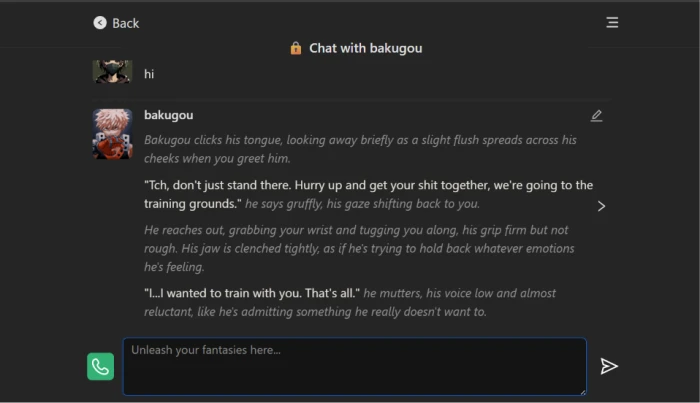
Pephop.ai chat interface with public character showing conversation panel message exchange chat composer functionality and validated AI character response workflow
The chat interface with a public character, validating workflow.
The validation: The chat workflow with a public character operates as expected, the conversation panel exposes message history, character responses, and a composer for user input. The platform responds appropriately to user messages, validating that the backend character infrastructure functions end-to-end. The chat experience is competent for the AI character category, though not category-leading on response latency or contextual coherence relative to specialist alternatives like Character.AI. For first-hand validation purposes, the chat workflow is functional infrastructure.
Report/Block Safety Infrastructure Plus Validated Chat Workflow

Pephop.ai exposes report and block safety controls on character profiles, allowing users to flag inappropriate characters or block specific characters from their discovery feed. This safety infrastructure is rare in the AI character platform category where most competitors lack visible report/block mechanisms or hide them behind nested settings menus. Combined with first-hand validation that the chat workflow operates as expected (Test 03), Pephop's positioning offers consumer-favorable safety tooling that several category peers do not match. For users prioritising platform safety infrastructure alongside character chat capability, the visible report/block controls represent meaningful editorial differentiation worth weighing against category-wide concerns documented in tc-blocker callout below.

Affiliate Program 40% Commission

Test 04 . Referral structure

Pephop.ai affiliate program banner showing up to 40 percent commission user referral incentive structure for platform user acquisition through referral marketing
The affiliate program advertising up to 40% commission.
Worth noting: The platform offers an affiliate program advertised at up to 40% commission on user referrals. The 40% commission rate is aggressive relative to typical SaaS affiliate programs which range 10-30% in the AI tool category. This signals platform reliance on user-driven acquisition rather than paid advertising channels, and prospective users should be aware that referral-driven recommendations may influence content they encounter about the platform externally. The commission structure itself is consumer-favorable for referrers but the broader signal about user acquisition strategy is worth noting in evaluation, third-party reviews and recommendations from affiliate-incentivised sources should be weighed accordingly.

Hidden Create Character UX

Test 05 . Discoverability issue
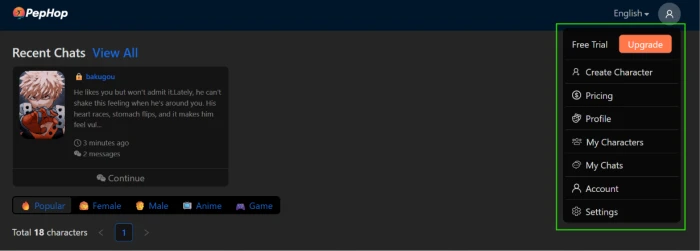
Pephop.ai profile dropdown menu showing create character my chats my character options hidden behind top-right profile icon discoverability issue for character authoring workflow
The profile dropdown menu revealing the hidden create character option.
What this surfaces: First-hand testing surfaced a UX discoverability issue. The character creation function is not exposed in primary navigation, accessible only through a dropdown menu triggered by the profile icon in the top-right of the interface. New users unfamiliar with the platform pattern would not naturally discover the create character option without exploring the profile menu. This UX choice signals product design preferences favouring library browsing over user-generated character creation, and creates onboarding friction for users who join the platform specifically to author rather than consume characters. The friction is the discoverability path rather than the creation tools themselves.

Character Creation Dashboard

Test 06 . Creation tools
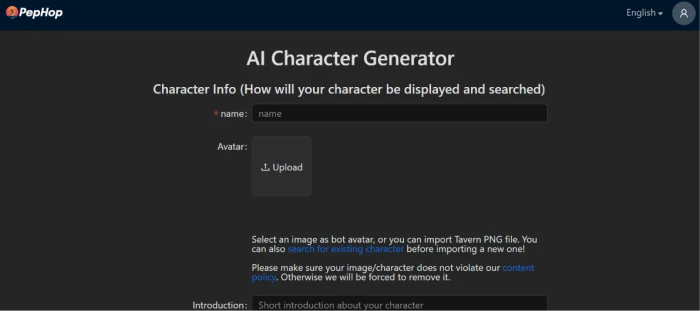
Pephop.ai character creation dashboard with character building fields personality definition appearance customization controls and backstory configuration for user-generated AI character authoring
The character creation dashboard once accessed through profile menu.
What this shows: Once accessed through the profile dropdown, the character creation dashboard exposes fields for character appearance, personality traits, backstory context, conversation parameters, and other customization options. The depth is competitive with the AI character category at the customization level, character authors have reasonable control over how their character behaves in conversation. The capability exists with category-standard depth, the friction is the discoverability path documented in Test 05 above rather than the creation tools themselves which function as expected for character authoring workflow.

Created Character Ready and Chat Validation

Test 07 . End-to-end pipeline
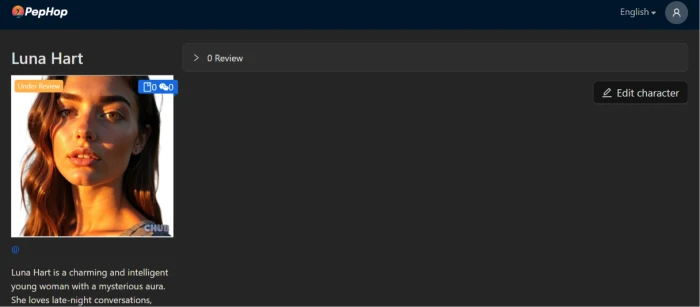

Pephop.ai created character profile ready for chat with character details bio personality summary and chat entry interface after creation completion workflow
The created character profile ready for chat sessions.
Pephop.ai chat interface with user-created character showing conversation panel functionality validation message exchange and end-to-end pipeline validation for character authoring workflow
The chat with the user-created character, validating end-to-end.
The takeaway: The character creation workflow completed end-to-end producing a usable character ready for chat. First-hand validation of the chat workflow with the user-created character confirms the backend recognizes character creation parameters in subsequent conversation responses. The end-to-end flow (create character then chat with own character) works as expected once the discoverability friction documented in Test 05 is navigated. For users committed to authoring characters, the creation-to-chat pipeline is functional infrastructure, the structural issue is the discovery path to reach the creation tools rather than the tools themselves.
!
Hidden Create Character UX Plus Category-Wide Privacy and Moderation Concerns

The character creation entry point is hidden behind the profile dropdown menu rather than exposed in primary navigation, creating discoverability friction for users who want to author characters rather than browse the public library. This UX choice obscures a primary platform capability and signals product design preferences favouring library browsing over user-generated content creation. Combined with category-standard concerns (privacy practices around conversation data not transparent across AI character platforms broadly, age verification self-declared rather than substantive, content moderation depending primarily on report-based community policing alongside the visible report/block tooling documented in tc-discovery callout above), the platform exhibits structural friction beyond the safety controls positive. Adult-oriented users should verify the platform's current content policies and data handling practices directly before extended use.

How this review was put together. First-hand testing on Pephop.ai in June 2026 covered the homepage with character library entry, the character detail page with visible report/block safety controls, validated chat workflow with a public character, the affiliate program with 40% commission positioning, the hidden create character UX accessible through profile dropdown menu, the character creation dashboard with personality and backstory fields, the completed user-created character ready for chat, and validated chat with the user-created character, evaluated under the FirmCritics AI Character Platform Methodology spanning library accessibility, character creation depth and discoverability, safety infrastructure visibility, chat workflow validation, affiliate program structure, privacy and data handling assessment, age verification practices, and content moderation governance.

10-Point Feature Review

03 . Honest scoring across capabilities and friction
Feature Scores at a Glance
Report/Block Safety Controls
7.5
Chat Workflow Validated
7.0
Public Character Library
6.0
Character Creation Depth
6.0
Affiliate Program Generosity
6.0
UI/UX Polish
5.5
Free Tier Sufficiency
5.5
Content Moderation Governance
5.0
Age Verification Practices
5.0
Privacy + Data Handling
5.0
Feature-by-feature breakdownScored on a 10-point scale, honest evidence-driven distribution
01
Report/block safety controls RARE IN CATEGORY
Documented in tc-discovery callout above and Test 02 first-hand evidence. Character profile pages expose visible report and block controls at the profile level rather than buried in settings menus. This safety infrastructure is rare in the AI character platform category where several competitors lack visible report/block mechanisms entirely. For users prioritising platform safety tooling, the visible controls give meaningful agency over their discovery feed and community-driven flagging of inappropriate characters.
VISIBILITY: Profile-level controlsVS PEERS: Rare in category
7.5
GOOD
02
Chat workflow validated END-TO-END WORKING
Documented in Test 03 and Test 07 first-hand validation. The chat workflow operates as expected with both public characters and user-created characters, conversation panel exposes message history, character responses, and composer for user input. The platform responds appropriately to user messages with character-consistent output, validating that the backend recognizes character creation parameters in subsequent conversation. Response quality is competent for the category without being category-leading versus specialist alternatives like Character.AI.
VALIDATION: Public + user-createdQUALITY: Competent, not specialist-leading
7.0
GOOD
03
Public character library CATEGORY-STANDARD
The public character library is browsable from the homepage with community-generated characters across multiple categories. Library scale is competitive within the AI character platform category though not at the massive-breadth level of Chub.ai. The discovery surface lets prospective users evaluate platform breadth without account creation. Quality variability is typical of user-generated platforms, prospective users should filter by rating or recency rather than assuming uniform quality across the catalogue.
SCOPE: Community-generated libraryTRADE-OFF: Quality varies by author
6.0
FAIR
04
Character creation depth CAPABLE BUT HIDDEN
The creation tools cover appearance, personality, backstory, scenario, and conversation parameters at category-standard depth (Test 06 first-hand evidence). Character authors have reasonable control over companion behaviour parameters before chat sessions begin. The capability itself is competent, the issue is the discoverability path documented in Test 05 and tc-blocker callout above. For users who successfully navigate to the creation surface, the tools deliver expected category-standard authoring infrastructure.
FIELDS: Appearance + personality + backstoryFRICTION: Discoverability not depth
6.0
FAIR
05
Affiliate program generosity 40% COMMISSION
Documented in Test 04. The 40% commission rate is aggressive relative to typical SaaS affiliate programs in the AI tool category (10-30% range). The structure is consumer-favorable for referrers willing to drive platform user acquisition. The broader signal is platform reliance on user-driven acquisition rather than paid advertising, which prospective users should weigh when evaluating third-party recommendations about the platform. The commission itself is positive for the referrer economy, the implication for external review independence is worth noting.
COMMISSION: Up to 40%VS CATEGORY: Aggressive vs 10-30% norm
6.0
FAIR
06
UI/UX polish HIDDEN CREATE PATH
The UI is functional but the hidden create character UX documented in Test 05 and tc-blocker callout signals product design preferences favouring library browsing over user-generated content creation. UI polish falls below mainstream alternatives like Character.AI which set higher standards for AI character platform UX. The platform delivers functional adequacy for users who tolerate the discoverability friction, but users expecting category-leading polish should evaluate alternatives.
POLISH: Functional, not elevatedFRICTION: Create UX hidden in profile menu
5.5
FAIR
07
Free tier sufficiency LIBRARY ONLY
The free tier provides library browsing and limited chat functionality, sufficient for platform evaluation before subscription commitment. Sustained workflow use requires paid subscription or referral credits earned through the affiliate program. The free tier sufficiency is category-typical rather than consumer-favorable, alternatives like JanitorAI with BYO-LLM economics offer more generous free-tier paths to extended use. For evaluation purposes the free tier is functional, for sustained use paid commitment is the realistic path.
SCOPE: Library + limited chatSUSTAINED: Paid subscription needed
5.5
FAIR
08
Content moderation governance REPORT-BASED
Content moderation depends primarily on community report-based policing through the visible report controls documented in tc-discovery callout above. The report mechanism is more visible than several category peers, but the underlying model still relies on community flagging rather than proactive platform-enforced verification. For users in age-restricted contexts or requiring strict content boundaries, community moderation should not substitute for self-imposed filtering. The report visibility is positive within the broader category-standard concerns.
MODEL: Report-based communityVISIBILITY: Above peer average
5.0
POOR
09
Age verification practices SELF-DECLARED
Age verification relies on self-declared age affirmation rather than substantive verification (cross-reference tc-blocker callout above). This is category-standard across AI character and roleplay platforms broadly, the gap between self-declaration and the mature content categories the platform allows represents real editorial concern. Parental oversight tools and platform-level age verification both fall short of standards set by larger consumer platforms with substantive verification infrastructure. The gap is not unique to Pephop but factors into platform selection for contexts where age-appropriate access matters.
METHOD: Self-declared affirmationGAP: Below substantive verification
5.0
POOR
10
Privacy + data handling TRANSPARENCY CONCERNS
Privacy practices around conversation data lack the transparency of larger AI platform peers (cross-reference tc-blocker callout above). The platform's data handling disclosures do not clearly specify retention periods, training use, or third-party sharing policies for user conversation content. For users sharing personal information or sensitive content with AI characters, this transparency gap is structural concern. Prospective users should treat conversations as not-fully-private and avoid sharing personally-identifying information they would not want potentially stored or processed beyond the immediate conversation.
DISCLOSURE: Below larger platform standardUSER ACTION: Avoid sensitive info sharing
5.0
POOR

Pros and Cons

04 . What works and what to weigh
+What users like
  • Report and block safety controls visible on character profiles at profile level rather than buried in settings, rare positive in AI character category
  • Validated chat workflow with both public and user-created characters first-hand in test session (Tests 03 and 07)
  • Character creation tools cover appearance, personality, backstory, scenario, and conversation parameters at category-standard depth
  • Public character library accessible from homepage for prospective user evaluation without account creation
  • Affiliate program offers up to 40% commission on referrals, aggressive relative to typical 10-30% SaaS norms
  • Functional freemium model with library access and limited chat free, paid subscription unlocks sustained workflow
What users dislike
  • Hidden create character UX in profile dropdown rather than primary navigation creates discoverability friction
  • Privacy practices around conversation data not transparent: retention, training use, and third-party sharing disclosures unclear
  • Age verification relies on self-declared affirmation rather than substantive verification
  • Content moderation depends on community report-based policing rather than platform-enforced proactive verification
  • 40% affiliate commission may influence external reviews from referral-incentivised sources, factor into recommendation independence assessment
  • UI polish below mainstream alternatives like Character.AI which set higher category standard
  • Free tier limited beyond library browsing, paid subscription required for sustained workflow use

Pricing Breakdown

05 . Freemium with subscription and referral credit options
FeatureFree TierPaid Subscription
Public Library Browsing Free without login Full access
Chat with Public CharactersLimited messages Higher limits
Character Creation Hidden in profile menu Higher limits
Report/Block Safety Controls Profile-level visible Profile-level visible
Affiliate Program Access Up to 40% commission Up to 40% commission
Advanced Features Unlocked on premium
Pricing Structure$0 limited accessMonthly/annual subscription
Best ForLibrary evaluation + casual chatSustained workflow + advanced features

The pricing reality: Pephop.ai operates on a freemium model with library browsing and limited chat free, while sustained workflow access and advanced features require paid subscription. The affiliate program offers up to 40% commission as alternative path to credits through referrals. Verify current subscription pricing and feature differentiation directly on the Pephop.ai plans page before committing.

Pephop.ai vs the Top 4 Alternatives

06 . How it compares in AI character category
PPephop.ai CCharacter.AI CChub.ai JJanitorAI CCrushon.AI
Score5.86.86.36.05.5
Report/Block Safety ControlsVisible at profile level Settings-levelTag-based filteringLimited visibility Not prominent
Validated Chat WorkflowTest 03 + 07 first-hand Established
Character Creation VisibleHidden in profile menu Primary nav Primary nav Primary nav Primary nav
Public Character Library Browsable LargeMassiveMassiveMedium
Affiliate ProgramUp to 40% commissionStandardStandard
Privacy TransparencyBelow standardStandardBelow standardLimitedLimited
Bring-Your-Own LLMLimitedYes (multiple)
Best ForUsers prioritising visible safety controlsMainstream safe AI companionMulti-tool creative roleplayBYO-LLM library usersPermissive content seekers

The picture: Pephop.ai's differentiation is the visible report/block safety controls at character profile level, rare in the AI character platform category. The trade-off is the hidden create character UX which obscures a primary platform capability, plus category-standard privacy and moderation concerns. For users prioritising visible safety tooling alongside chat capability, Pephop is materially differentiated; for users wanting category-leading polish or specialist depth on individual features, Character.AI, Chub.ai, or JanitorAI offer better positioning on their respective strengths.

What Users Are Saying

07 . Community feedback patterns from across user communities
Tried Pephop and the chat experience is reasonable but the create character function is hidden in this weird profile dropdown which took me forever to find. Most platforms put create character in the main nav, here it's tucked into a menu under your profile icon. Once you find it the creation tools work fine but the discoverability is genuinely bad if you join specifically to author characters. The safety controls on character profiles are actually nice though, you can report or block characters which is more than most platforms in this category offer.
r/AIRoleplay user
Character creation UX feedback
★★★☆☆
r/AIRoleplay
Reasonable AI character platform with one feature that stood out for me: visible report and block buttons on character profiles. I've used several AI roleplay platforms and the safety tooling is often nonexistent or buried in settings. Pephop puts it right on the character page where you can actually use it. The rest of the experience is category-standard, chat works fine, characters are decent variety, free tier is limited but functional for evaluation. Affiliate commission is high at 40% which is generous for referrers.
Trustpilot reviewer
Safety infrastructure appreciation
★★★☆☆
trustpilot.com
Tested Pephop alongside other character platforms. The chat itself is competent, characters respond appropriately. The differentiator is the safety infrastructure with report/block controls on profiles. The annoyance is the create character UX, it's hidden in a profile menu instead of accessible from main nav, which is a strange product choice for a platform that depends on user-generated content. Overall mid-tier in the category, decent for casual character chat but not the polish of Character.AI.
r/CharacterAI user
Cross-platform comparison
★★★☆☆
r/CharacterAI
Functional AI character platform with notable safety infrastructure (report/block on character profiles) and an aggressive 40% affiliate program. Chat workflow operates as expected with both public and user-created characters. The hidden create character UX is the main usability friction, prospective character authors should know the function exists but is buried in the profile dropdown. Privacy and moderation practices are category-standard rather than category-leading. Worth evaluating if visible safety controls matter for your use case.
Product Hunt reviewer
Balanced platform assessment
★★★☆☆
producthunt.com
· The Verdict ·
5.8/10
Should you use Pephop.ai? Here is who it is for.

Use Pephop.ai if visible report/block safety controls at the character profile level are editorial priority over category peers without comparable safety infrastructure; the validated chat workflow with both public and user-created characters fits the intended use case; the 40% affiliate program structure provides referral-credit economics that match expected referral activity; and the hidden create character UX (accessible through profile dropdown) is acceptable discoverability friction for the platform's safety infrastructure differentiation.

Skip Pephop.ai if hidden create character UX represents unacceptable discoverability friction for character authoring workflow (see tc-blocker callout); category-leading polish from alternatives like Character.AI better fits the use case; specialist capabilities like Chub.ai's integrated image generation or JanitorAI's BYO-LLM economics matter more than safety control visibility; privacy transparency below larger AI platform peer standard outweighs the report/block positive; or the 40% affiliate commission signal about user acquisition strategy influences perception of external recommendations about the platform.

Category RankMixed Bag
Compared To4 Rivals
Safety ControlsVisible
Features Scored10 Points

Discussion

Join the discussion and share your perspective.