

What Phyzii CRM Does
Phyzii CRM is a sales-force automation platform built specifically for pharmaceutical field teams. It handles the full working loop a medical representative runs on, from territory and call planning through customer profiling, call reporting, expenses and attendance, with a separate e-detailing product, Phyzii CLM, built for the physician conversation itself. The vendor is Cirrius Technologies, headquartered in Mumbai with offices in Bengaluru, and the product is aimed at pharma companies across India and other emerging markets.
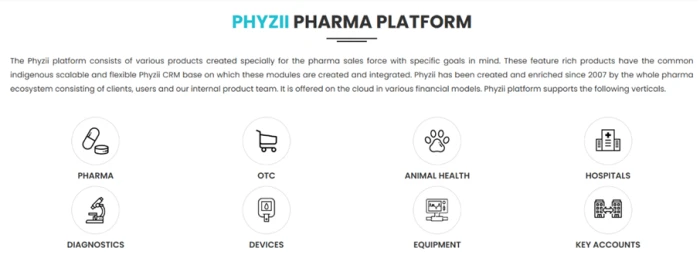
The platform splits into a rep-facing mobile app and a marketing-and-management layer. Reps plan tours, map customers and detail products in the field. Marketing teams control what reps can present through targeted playlists and locked pages, and managers get dashboards, KPI heat maps and an approval workflow for detailing content. Cirrius positions Phyzii as a single base that stretches past prescription pharma into OTC, animal health, hospitals, diagnostics, devices and key accounts, so a company selling across several of those lines can run them on one system rather than stitching together separate tools.
What Happened When We Tested It
I ran this from inside a live Phyzii account, working the screens a medical representative touches on an ordinary field day. The aim was to watch the app behave once you are logged in and planning actual calls, rather than read the marketing claims. That meant starting at the home dashboard, building a real tour plan, and pushing it through the app's own checks.
Reading the Working Day at Login
Test 01 . Home dashboard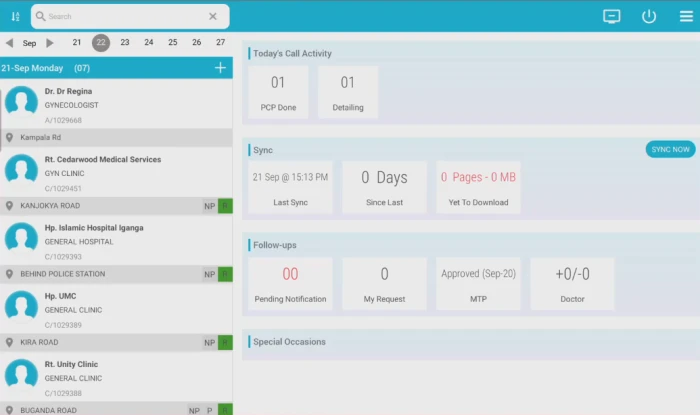
Opening the Full Module Menu
Test 02 . Module coverage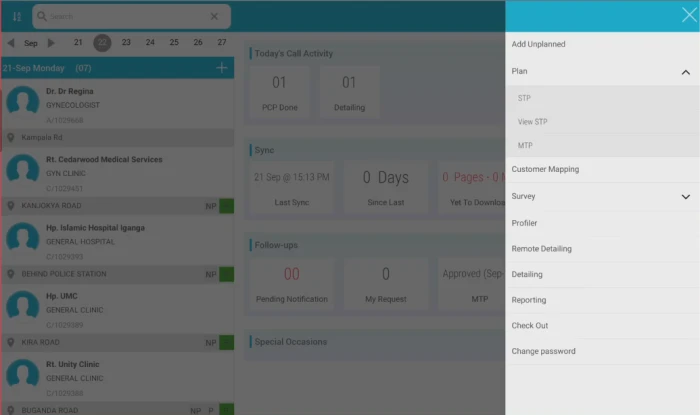
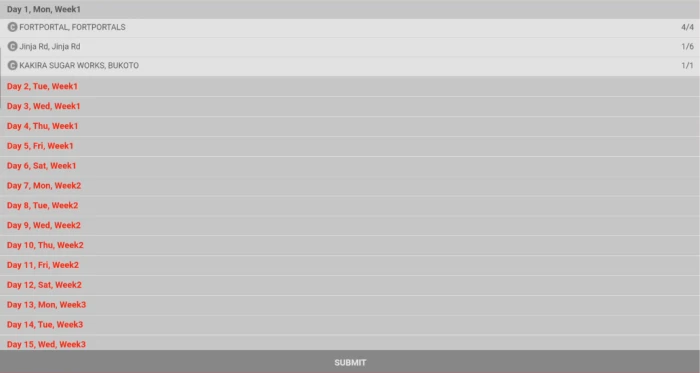
Mapping Customers Into a Tour
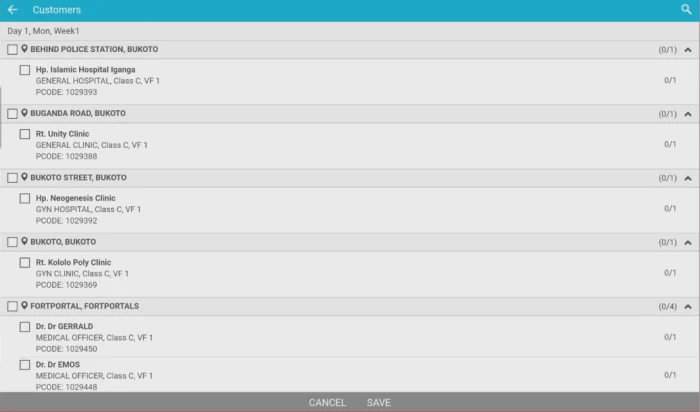
Test 03 . Tour planning
|
|
Running the Plan Through Validation
Test 04 . Plan validation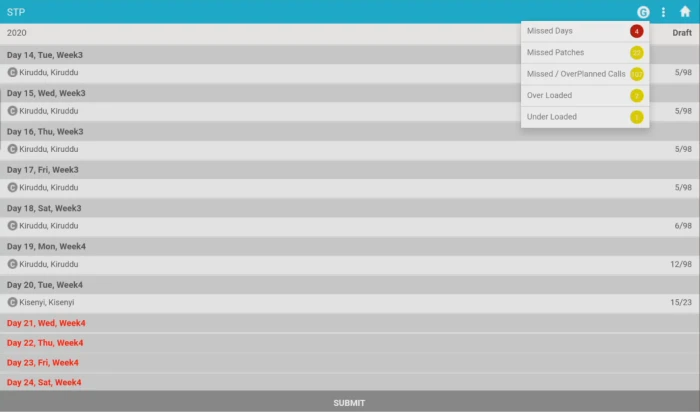
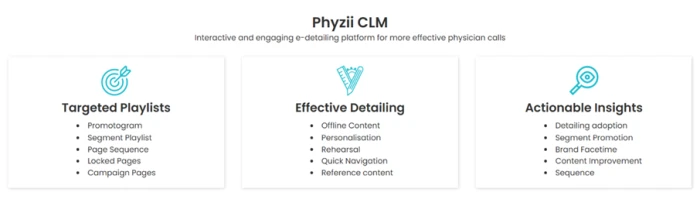
Inspecting the CLM e-Detailing Layer
Test 05 . Content control
|
|
Trying to Get In Without a Sales Call
Test 06 . Access path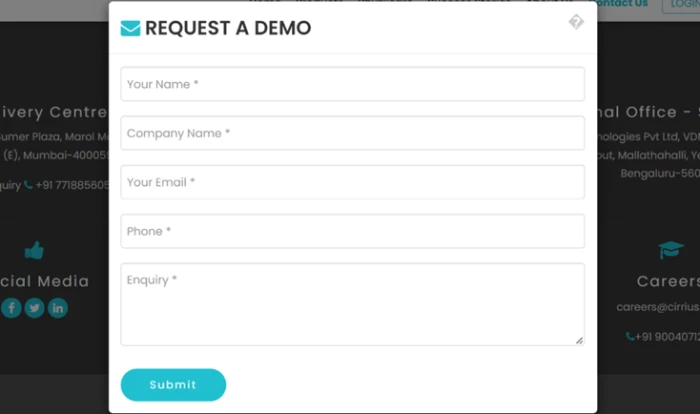
The combination that genuinely held up was the plan validation step sitting on top of an offline-ready app. The handset reported zero pending content, meaning it could run away from a network, and the planner caught twenty-two missed patches and over a hundred misallocated calls before submission. A tool that corrects the rep at the point of planning, not weeks later in a head-office report, is the kind of thing that justifies a field CRM.
There is no trial, no sandbox and no published entry point. A buyer cannot hand the app to a few reps for a week before committing. Every evaluation starts with a demo form and a call from Cirrius, which lengthens the buying cycle and rules Phyzii out for any team that wants to test before it talks to sales.
10-Point Feature Review
Pros and Cons
- Self-auditing planner: the schedule flags its own gaps before a manager ever sees them
- Built to work offline: reps stay productive between clinics on a weak or dead signal
- Marketing keeps control: locked pages and set sequences govern what reps present
- Remote detailing is native: video calls to absent physicians sit in the standard menu
- One base, many lines: OTC, animal health and diagnostics teams run on the same system
- No self-serve trial: you cannot put the app in reps' hands before committing
- Dated interface: screens are functional but lag cleaner modern mobile CRMs
- Dense dashboard: the home view shows everything but guides you to nothing first
- Sales-led only: every evaluation opens with a form and a call, not a login
Pricing Breakdown
Pricing in plain terms: Cirrius publishes no rates for Phyzii CRM. The company describes the product only as offered on the cloud in various financial models, which means the number is set during the sales conversation and depends on team size, modules and the verticals you run. There is no entry price, no per-user band and no public tier to anchor against. For a category this is not unusual, since enterprise pharma CRM is almost always quote-based, but it does mean a buyer walks into the demo with no reference point and has to negotiate from zero.
What shapes your eventual quote is scope. The core rep suite, the Phyzii CLM e-detailing layer, and add-on modules such as the MLR approval workflow, the dedupe-and-MSL system and the management KPI maps are separate pieces. A team taking the full stack across several verticals is a different contract from one running call reporting and basic planning, so the only way to learn your real cost is to request a demo and get Cirrius to scope it.
No public pricing was available as of October 29, 2026. Figures are set per deal, so request a quote through the official site for your own scope.
Phyzii CRM vs the Top 3 Alternatives
| PPhyzii CRM | VVeeva CRM | SSalesforce LS | CClose-Up CRM | |
|---|---|---|---|---|
| Pricing | Quote only | Quote only | Quote only | Quote only |
| Free trial | None, demo only | None, demo only | Limited editions | None, demo only |
| Offline field use | Strong, home-screen sync | Strong | Depends on build | Strong |
| Plan self-validation | Built in, pre-submit | Via reporting | Via configuration | Via reporting |
| Best For | Emerging-market field teams | Global enterprise pharma | Custom CRM builds | LatAm pharma field |
Picking between them: Phyzii fits a mid-to-large field team in India or another emerging market that wants a pharma-specific app working reliably offline, with planning discipline built into the rep's own flow. Veeva is the global enterprise standard, the safe choice for a multinational that needs the deepest ecosystem and will pay for it. Salesforce for Life Sciences suits a company that wants to build its own CRM on a general platform and has the budget and team to configure it. Close-Up CRM is the name to shortlist against Phyzii in Latin American markets, where its field footprint is strongest. Every one of these is quote-based, so the real comparison happens once each vendor scopes your deal.
Discussion
Join the discussion and share your perspective.