
A hands-on comparison of two AI video tools built for completely different jobs, and how to pick the one that fits your channel or business.
Both tools get lumped together in best AI video generator searches, yet they were built for opposite jobs. MagicLight AI turns a written script into a long animated story where the same characters appear in every scene. HeyGen turns a script into a polished video of a realistic person speaking to the camera.
Pick the wrong one and you fight the software for weeks.
This guide breaks down where each tool wins, what our hands-on testing showed, and which one fits the kind of video you actually plan to make. We reviewed both platforms separately, and this comparison pulls those findings into one buying decision.
Quick Verdict
If you have thirty seconds, this table tells you which tool to pick for your use case.
| If You Need… | Winner | Why |
|---|---|---|
| AI Avatar Videos | HeyGen | Realistic presenter, best lip-sync |
| Training Videos | HeyGen | Templates plus multilingual delivery |
| Video Translation | HeyGen | 175+ languages with accent matching |
| YouTube Automation | MagicLight | Faceless story output at scale |
| Story Videos | MagicLight | Character Lock across every scene |
| Long-Form Content | MagicLight | Up to 50 minutes per project |
| Business Presentations | HeyGen | Avatar plus brand kit |
| Faceless Channels | MagicLight | No camera or presenter needed |
The pattern is simple. HeyGen owns the talking-presenter format. MagicLight owns long-form animated storytelling.
What Is MagicLight AI?
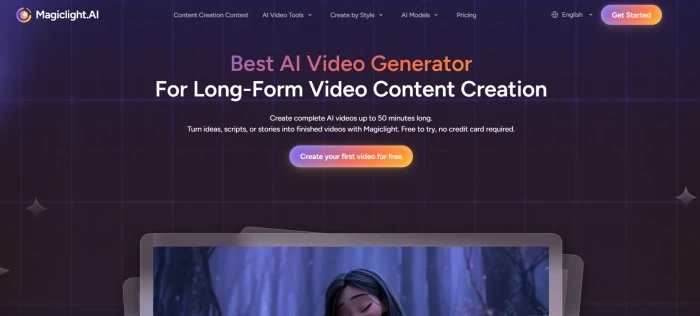
MagicLight AI is a story-to-video platform built around one capability no mainstream competitor matches: generating complete animated videos up to 50 minutes long where characters stay visually consistent from the first scene to the last. You paste a script, and the AI handles storyboarding, scene generation, voiceover with lip-sync, subtitles, and background music inside one workflow.
It reports 20M+ creators and 30M+ videos generated, with most of that traction in faceless YouTube channels and kids’ story content. In our full review it scored 6.5 out of 10. The capability is real and uncontested. The catch is a credit system that drains faster than the advertised minutes suggest, which sits behind its 2.2 Trustpilot rating.
Read our complete MagicLight AI review for the full credit math and test footage.
What Is HeyGen?
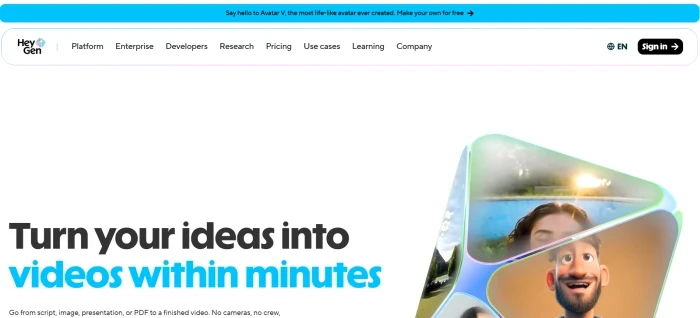
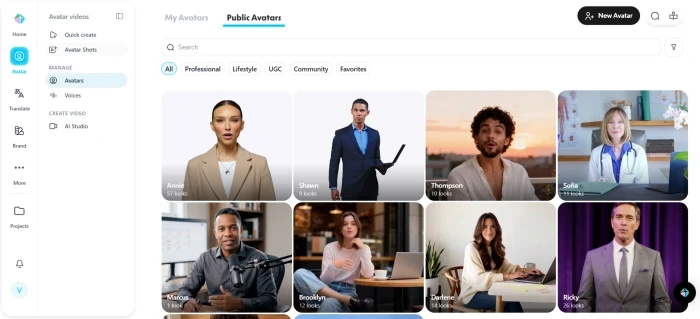
HeyGen turns written scripts into videos starring realistic AI avatars who speak in 175+ languages with accurate lip-sync. You type the words, the avatar performs them. You can pick from 170+ stock avatars or train a custom one from a two-minute webcam recording in under five minutes.
What sets it apart from rivals is output realism. The avatars blink and shift their weight between sentences, reading as a real presenter rather than a puppet. A post-render editing timeline adds scene-level control with B-roll inserts and voice adjustments. It scored 8.7 out of 10 in our review, the highest in its category, backed by a 4.6 G2 average across 3,284 reviews.
Read our full HeyGen review for pricing gotchas and the linked sample output.
Feature Comparison Table
Here is how the two platforms line up on the features buyers ask about most.
| Feature | MagicLight AI | HeyGen |
|---|---|---|
| Text-to-Video | ✓ | ✓ |
| AI Presenter Avatars | Limited | Excellent |
| Video Translation | Limited | Strong |
| Long-Form Video | Strong (up to 50 min) | Moderate |
| Storytelling / Scene Arcs | Strong | Moderate |
| Character Consistency | ✓ ~90% (Character Lock) | Avatar-based |
| Voice Cloning | ✓ | ✓ |
| Templates | ✓ | ✓ 200+ |
| Team / Collaboration | Limited | Strong |
| Max Video Length | 50 min | 30 min/clip (60 on Business) |
| Lip-Sync Quality | Functional | Best-in-class (9.4) |
| Starting Price | Free / $6 mo | Free / $29 mo |
The split is clear in the rows. MagicLight leads on length and storytelling. HeyGen leads on avatar realism and multilingual delivery, plus stronger team collaboration.
AI Avatar Quality
Winner: HeyGen
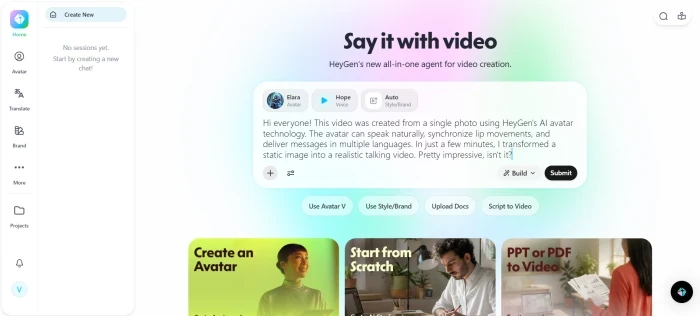
HeyGen exists to make one thing look right: a realistic person speaking to the camera. In our testing the lip-sync landed as the best in the category at 9.4 out of 10, with strong accuracy across European and East Asian languages. We uploaded a single portrait photo, pasted a script, and the platform returned a fully rendered talking-avatar video where the mouth movements matched the audio closely.
The custom avatar flow is the fastest we have measured. A two-minute webcam recording produced a usable digital twin in under five minutes. The stock library covers 170+ avatars across many ethnicities and age ranges, with varied attire.
MagicLight does not compete here, and that is the point. It generates animated story characters, not presenter avatars. If your video needs a human face delivering a message to camera, HeyGen is the only real choice between these two.
Long-Form Video Creation
Winner: MagicLight
This is the row HeyGen cannot answer. MagicLight produces a single coherent video up to 50 minutes long, while most avatar and clip tools measure output in seconds or a few minutes.
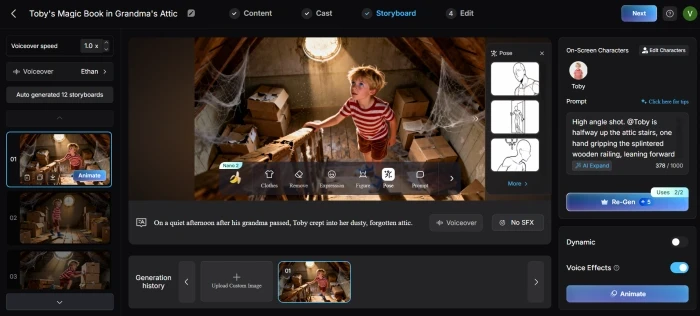
The feature that makes it work is Character Lock. You define a character’s face and outfit once, and the AI keeps that character looking the same across every scene. One tester reported about 90% consistency across 15 generated scenes, which solves the issue that breaks most AI video storytelling, where a character’s appearance shifts between clips.
The whole pipeline runs without external tools. Script writing, storyboard review, scene generation, voiceover, subtitles, and music happen in one place, and someone with no editing experience can reach a publish-ready video.
The honest limit: the animation is often a gentle camera pan over a static image rather than fluid character motion. For illustrated storytelling that reads fine. For a Pixar-style movement it disappoints.
For YouTube Automation
This section answers the question many creators arrive with: which tool builds a YouTube channel faster?
It depends on the channel type. For faceless automation (story channels, history explainers, and kids’ content), MagicLight is the stronger engine. It generates long narrated videos with recurring characters and no filming required, the exact format behind the faceless channel boom.
For channels built around a host, HeyGen fits better. If your channel is your face or a branded presenter, HeyGen lets you script an episode and have the avatar deliver it without a camera. Tutorials and talking-head explainers come together quickly.
A blunt summary: MagicLight automates the faceless story channel. HeyGen automates the presenter-led channel. Few creators need both at once.
Video Translation and Multilingual Reach
Winner: HeyGen
If you publish to audiences in more than one language, this is decisive. HeyGen speaks 175+ languages and preserves accent characteristics instead of flattening every voice into the same robotic tone. Marketing and training teams use it to turn one script into dozens of localized versions.
MagicLight offers voiceover in 10+ languages, which covers narration for story content, but it is not a translation product. There is no one-click translate-this-finished-video workflow of the kind HeyGen is known for.
For a creator localizing a faceless story channel into a second language, MagicLight is workable. For a business publishing across many markets, HeyGen is built for the job.
Voice Cloning
Both platforms clone a voice from a sample, so this row is closer than most. HeyGen needs a 60-second minimum sample (two minutes recommended), and its accent preservation is strong. MagicLight offers voice cloning on paid tiers, cloning a creator’s own voice for narration.
The edge goes to HeyGen on naturalness. For animated narration, MagicLight’s clones are serviceable. Neither matches a dedicated voice tool like ElevenLabs for emotional range.
Support and Reliability
This is where the two platforms separate most sharply, and it belongs in any honest buying decision.
HeyGen carries a 4.6 average on G2 across 3,284 reviews, holds SOC 2 Type II certification, and keeps user data out of model training by default. Email support replies within 12 to 24 hours.
MagicLight tells a harder story. Its Trustpilot rating sits at 2.2 from 84 reviews, with more than 80% negative. The dominant complaints center on the credit system burning faster than the advertised minutes, plus support emails going unanswered for weeks. The company does respond to some reviews and points users to Telegram and Discord, which are reportedly more responsive than email.
If reliability and a clear paper trail matter to your business, this gap is real and well-documented.
Pricing Comparison
On the surface MagicLight looks far cheaper. Underneath, HeyGen is the more honest number.
MagicLight AI Pricing
| Plan | Price (annual) | What you actually get |
|---|---|---|
| Free | $0 | A couple of short clips |
| Standard | $6/mo | ~6 min of real output |
| Pro | $17.50/mo | ~37 min of real output |
| Ultra | $45/mo | ~125 min of real output |
| Ultimate | $75/mo | ~233 min of real output |
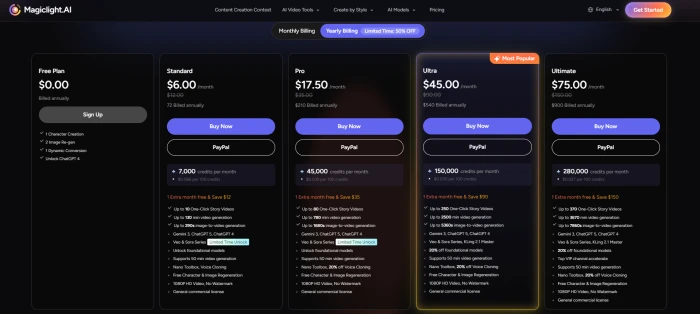
MagicLight advertises much higher minute counts on every tier. The figures above reflect the credit math from our review, where roughly 1,200 credits produce one minute of video. Confirm current rates on your own account before paying for a year.
HeyGen Pricing
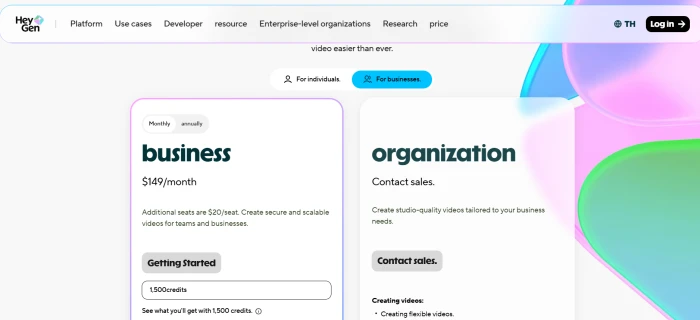
| Plan | Price | What’s included |
|---|---|---|
| Free | $0 | 3 min/mo, watermark, 720p |
| Creator | $29/mo | 15 min/mo, no watermark, 1080p |
| Business | $149/mo + $20/seat | Up to 60 min, 4K, brand kit |
| Enterprise | Custom | Unlimited video, full API, SSO |
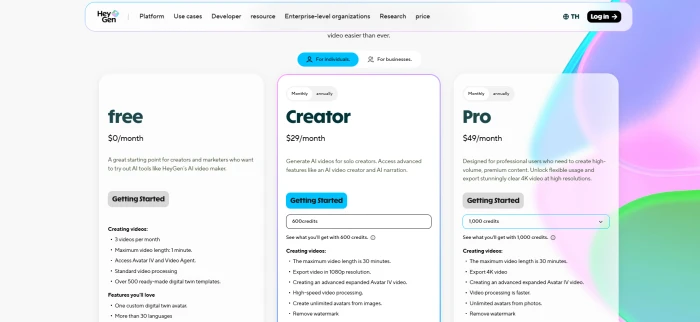
HeyGen’s pricing is predictable, though the Creator tier’s 15 minutes a month runs out fast for serious output, and 4K is locked to the Business tier at $149.
Price verdict: MagicLight wins on entry cost for long-form output if you manage credits carefully. HeyGen costs more and delivers what the page promises.
How They Performed in Our Testing
We ran both platforms through three jobs that map to real buyer needs. Full screenshots for each test live in our individual reviews, linked throughout this guide.
Test 1: A Two-Minute Story Video
Winner: MagicLight
We entered a simple prompt (a young boy discovers a magical book that brings drawings to life) and let MagicLight build it out. The AI expanded that line into a multi-scene script, locked a character design, generated the storyboard, and rendered a narrated video with subtitles and music. HeyGen has no equivalent narrative workflow. It can voice a script through an avatar, but it does not storyboard a multi-scene story with a recurring animated cast. MagicLight wins this one outright.

Test 2: A Talking Avatar Presentation
Winner: HeyGen
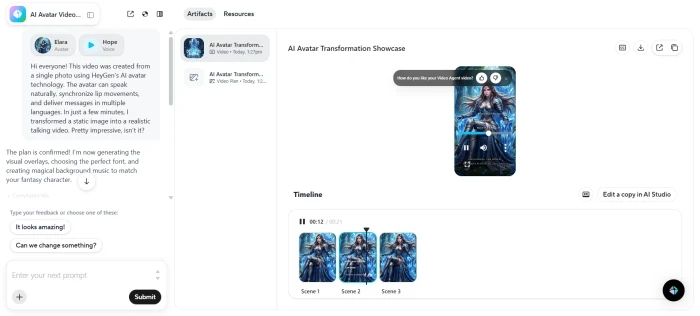
We uploaded one portrait photo, pasted a short script, and HeyGen returned a realistic talking-avatar clip with tight lip-sync and a post-render editing timeline. The output reads as a real presenter on camera. MagicLight produces animated characters, not a photoreal human delivering a message, so it was never built for this test. HeyGen wins.
Test 3: Multilingual Content
Winner: HeyGen
HeyGen’s 175+ language coverage and accent preservation made localizing the same script effortless, with the avatar re-performing the lines in each language. MagicLight’s narration languages are narrower and aimed at story voiceover, not business localization. HeyGen wins again.
The pattern across testing was consistent: each tool dominated the job it was designed for and stumbled on the others. That is the clearest signal in this whole comparison.
Which Is Easier for Beginners?
Most first-time buyers care about how fast they can ship something.
HeyGen is the faster start. Signup to first finished video runs under ten minutes, helped by 200+ templates and an AI script generator. The learning curve is low.
MagicLight takes longer to feel comfortable. The first video is realistic within about an hour, but the real learning curve is the credit system. Knowing how credits get consumed, and regenerating single weak scenes instead of scrapping a whole project, separates a smooth experience from a frustrating one.
For the first result, HeyGen wins. For long-form output once you understand the credits, MagicLight pays off.
Who Should Buy MagicLight AI?
Choose MagicLight AI if your work looks like this:
- Faceless YouTube channels that need long narrated videos without a presenter
- Kids’ and bedtime story content with a recurring cast
- History, faith, or documentary-style explainer channels
- Long-form animated content where character consistency across scenes matters
- A tight starting budget paired with patience for a credit system
Who Should Buy HeyGen?
Choose HeyGen if your work looks like this:
- Personal-brand and talking-head videos where a real face matters
- Sales, marketing, and product videos that ship on a schedule
- Course and training content built from scripts
- Multilingual campaigns rolling out across many markets
- Teams that need collaboration, brand kits, and priority rendering
Final Verdict
This is a rare comparison where naming a single winner would mislead you, because the two tools barely compete for the same job.
MagicLight AI is the better choice for storytelling and long-form animated video, especially faceless YouTube channels that need consistent characters across a 10 to 50-minute runtime. Accept the credit system, manage it deliberately, and it does something no other mainstream tool does.
HeyGen is the better choice for businesses, educators, and marketers who need realistic AI avatars and multilingual presenter videos. It scores higher in our reviews (8.7 versus 6.5), it is more reliable, and its pricing delivers what it promises.
Decision rule: if your video needs a real face speaking, choose HeyGen. If it needs a long animated story, choose MagicLight.
Comments
Join the discussion and share your perspective.